Trade Insights

How to Find Trusted Suppliers in India: A Complete Guide for Businesses

B2B Ranjeet
9 min read
How to Find Trusted Suppliers in India
9 min read Updated 30 Jul 2026
Share:

Over the last decade, India has emerged as the world’s most preferred sourcing destination. From textiles, pharmaceuticals, engineering goods, and handicrafts to food products, chemicals, and electronics, businesses across the globe rely on Indian export suppliers for high-quality products at competitive prices. 

According to the Ministry of Commerce & Industry, India's merchandise exports crossed USD 437 billion in FY 2024-25, making the country one of the world's leading sourcing destinations. So, with a vast supplier network and strong export capabilities, India offers opportunities to businesses of every size. But now the question is: how to find trusted suppliers in India? Well, it is not that simple. Because the sheer number of suppliers can make the sourcing process quite difficult. 

A quick online search may return thousands of manufacturers, wholesalers, and exporters offering similar products. And choosing a supplier based solely on price or online listing can lead to quality issues, delayed deliveries, poor communication, and financial losses. 

Finding the right supplier requires much more than comparing quotations or choosing the lowest price. It essentially involves multiple steps. So what are these steps? If you want to know the important steps to find verified suppliers in India, stay with us through this blog. Whether you are a first-time importer, an established distributor, or a business looking to diversify its supply chain, this blog will walk you through the best way to find trusted suppliers in India. You will learn where to search, how to verify wholesale suppliers India, the warning signs to watch for, and key factors to consider before placing your first order. 

Why Finding the Right Supplier Can Make or Break Your Business?

Finding the right suppliers in India can ultimately make or break your business. This is due to so many factors. But before we begin to know about the reasons, it is important for you to understand what makes a supplier trustworthy and verified. 

A reliable manufacturer in India follows all the regulatory requirements and has legal standing. They are registered under the GST and have an import-export code (IEC) or other important certification. 

If you check all these measures before buying from a supplier in India, you are choosing a risk-free option. You are not only relying on some extrapolated number from the internet or a customized quotation to select a supplier online; instead, you check some essential factors. This significantly increases the chances of building a successful long-term partnership with a genuine product supplier. Here is a step-by-step guide on how to find trusted suppliers in India. 

Step 1. Clearly Define Your Product and Supplier Requirements

This is the most important and initial step for finding verified suppliers in India. Before you begin the actual process of finding suppliers, you must have a clear understanding of what kind of product you are looking for.  

Many businesses make this common mistake: they don't clearly define what kind of product they are looking for and don't give suppliers a clear briefing. As a result, suppliers are unable to meet the requirements, which sours the relationship and leads to business losses. 

  • Start by preparing a detailed product specification. Include information such as product type, material dimensions, quality standards, packaging requirements, branding, and any industry-specific requirements. 

  • Next, define your purchasing requirements. In this part, specify your expected order quantity (MOQs), target price, preferred payment terms, delivery timeline, and shipping destination. 

  • Specify if there is required compliance certification for the products you are buying, such as ISO 9001, CE, FDA, HACCP, WHO-GMP, or other industry-specific approvals. 

Step 2. Search Verified B2B Supplier Platforms in India

Once you are clear on what kind of product you are looking for for your business, the next steps are to search for verified B2B supplier platforms. While there are several B2B suppliers in India, you must search for suppliers only on authentic platforms and compare quotations, product specifications, and supplier capabilities from multiple suppliers. You need to basically look at these important measures: 

  • Check that the B2B platform allows only verified or trusted suppliers to operate. 

  • It lets you browse product catalogs, review company profiles, compare quotations, and communicate directly with businesses.

  • You can review the company’s years in business, product range, manufacturing capabilities, export experience, certifications, customer range, and response time. 


Verification Method

Why It Matters

GST Certificate

Confirms the business is legally registered for taxation

Import Export Code (IEC)

Confirms the supplier is authorized to export goods 

ISO certificate

Demonstrates adherence to quality management standards

Product Sample 

Helps verify product quality before bulk purchasing


Step 3. Check Supplier Authenticity through Government Sources 

If you want to go beyond the basics and cross-check the supplier's information, you can check supplier authenticity through government sources and available free public databases. 

  • Start by checking the supplier’s GST (Goods and Services Tax) registration number. You can verify the GSTIN through the official GST portal. 

  • If you are sourcing products for international trade, make sure that the supplier has a valid Import Export Code (IEC). You can verify it through the DGFT portal. 

  • For incorporated companies, you can verify registration details on the Ministry of Corporate Affairs. 

  • Other than this, if required, you can check whether the supplier is a member of recognized Export Promotion Councils (EPCs) or industry bodies such as FIEO (Federation of India Exports Organization), APEDA, EEPC India, Phamexcil, or TEXPROCIL. 

Expert Tip: Never rely on a supplier’s website alone. Always verify their GST, IES certification, customer reviews, and product samples before placing a bulk order. 

Step 4. Understand Important Certifications Before You Buy 

A supplier’s certification can tell you a lot about its commitment to quality, safety, and compliance. So before you buy or place orders, make sure that the supplier holds the certifications required for your product category and target market. 

Generally, the certification you should look for depends on the type of product you are sourcing. For example, if you are buying food-related products, make sure the supplier has FSSAI, HACCP, or ISO 22000 certification. And if you are buying any machinery-related products, check that the manufacturer has ISO 9001 certification, CE, and BIS approvals. 

Step 5. Always Test Product Samples Before Bulk Orders 

No matter how experienced or well-reviewed a supplier is, never place a bulk order before testing the product samples. This way you can assess the product’s quality and suitability. Product samples also provide an opportunity to evaluate the supplier’s professionalism. So, while testing the sample product, pay attention to:

  • Does the product meet your expected quality, material, and finishing standards?

  • How quickly the supplier prepares and ships the sample to you. 

  • How accurately they follow your instructions.

  • How responsive they are to your questions and revisions 

Step 6. Analyze the Supplier’s Production and Delivery Capacity 

A supplier may offer competitive pricing and high-quality products, but if they cannot produce and deliver your products on time, it can cause problems for you and your business. 

So, before entering into a long-term relationship, evaluate whether the supplier has the production and operational capability to meet your present and future requirements. 

You can start by asking a few questions of the supplier and analyzing points such as:

  • What is the supplier’s manufacturing capacity?

  • How many units can the supplier produce each month?

  • Ask whether the supplier can increase production during seasonal demand.

In addition to these questions, you need to understand the supplier's delivery and logistics capabilities. Ask about the order processing timelines, packaging standards, shipping methods, export experience, and ports they commonly use. 

Step 7. Attend Trade Fairs and Industry Events for Better Networking 

While finding suppliers may seem convenient to a lot of people, it can never be replaced by direct contact or in-person meetings. So attending trade fairs and industry events is the best way to connect with the trusted wholesale suppliers from India. The country has a rich culture of hosting the best-known trade events, business fairs, and corporate events. 

You can visit these fairs and get in-person demos of various products and services from across the country. These places are perfect for building networks and checking out the latest products on the market. In India, you can participate in events such as:

  • India International Trade Fair

  • Bharat Tex

  • IHGF Delhi Fair

  • Auto Expo

  • AAHAR

  • India Pharma Expo

Step 8. Review Communication, Transparency, and Response Time 

One of the last steps is to closely review the supplier's communication and response. You must evaluate how the supplier interacts with you from the very beginning. You need to pay attention to:

  • How quickly does the supplier respond to your inquiries?

  • Do they answer your questions clearly?

  • Are they willing to provide detailed product specifications, pricing, certifications, and delivery timelines?

A trustworthy supplier is transparent about their capabilities, limitations, and business processes rather than making unrealistic promises just to secure an order. During your conversations, assess their professionalism. Clear and consistent communication, prompt follow-ups, and willingness to resolve concerns are all signs of a supplier that values long-term business relationships. 

Final Tips for Building Long-Term Supplier Partnerships

Here are a few tips that can help you build long-term partnerships with a verified product supplier in India:

  • Communicate expectations clearly: To avoid confusion later, you must communicate all your expectations to the supplier clearly. You must discuss points such as product specifications, quality standards, delivery schedules, and payment terms. 

  • Pay on time and honor agreements: If you fulfill your contractual commitments, it ultimately helps to build trust and strengths your relationship with the supplier. 

  • Sign a written agreement: You must sign a written purchase agreement outlining product specifications, payment terms, quality standards, delivery schedule, and dispute resolution procedures.

  • Provide regular feedback: Keep communication open and share constructive feedback on product quality, packaging, and services so the supplier can continuously improve. 

  • Review supplier performance regularly: You must evaluate the product quality, on-time delivery, responsiveness, and overall service to ensure that the partnership continues to meet your business goals. 

Conclusion

To sum up the blog, India has a vast network of suppliers and manufacturers offering a wide range of products. But when you find trusted suppliers in India, you must complete the supplier verification process and take a few essential steps. You must compare multiple suppliers, verify credentials, request samples, and build long-term partnerships before placing bulk orders. Ultimately, the key is to start small and then scale up. You can start your journey with B2B Trademart and connect with several reputed suppliers instantly.


Frequently Asked Questions

How to find verified suppliers in India? +
B2B Trademart is a one-stop solution where you can find verified suppliers in India. You simply have to share your product requirements, and you will find hundreds of options of trusted wholesale suppliers matching your needs.
How can I verify if an Indian supplier is genuine? +
To verify genuine product suppliers from India, check the supplier's GST registration, IEC, company website, export history, customer reviews, and request product samples before placing an order.
Should I request product samples before placing bulk orders? +
Yes, because product samples help you verify product quality, packaging, and specifications before placing a bulk order.
Is it safe to buy from Indian suppliers online? +
Yes, it is safe to buy from Indian suppliers online. But before you do this, you must verify product quality, use secure payment methods, and sign a clear purchase agreement.
Tags: trusted suppliers in India how to find suppliers in India verified suppliers India reliable suppliers India B2B suppliers India supplier verification India find manufacturers in India India sourcing guide
B2B

Ranjeet

Trade insights, sourcing guidance, and market trends for buyers and sellers across India's B2B economy.

Related Articles

best b2b portal in india, top 10 b2b portal in india, top 10 b2b platforms in india,

Top 10 B2B Portal in India for Manufacturers, Wholesalers & MSMEs (2026 Guide)

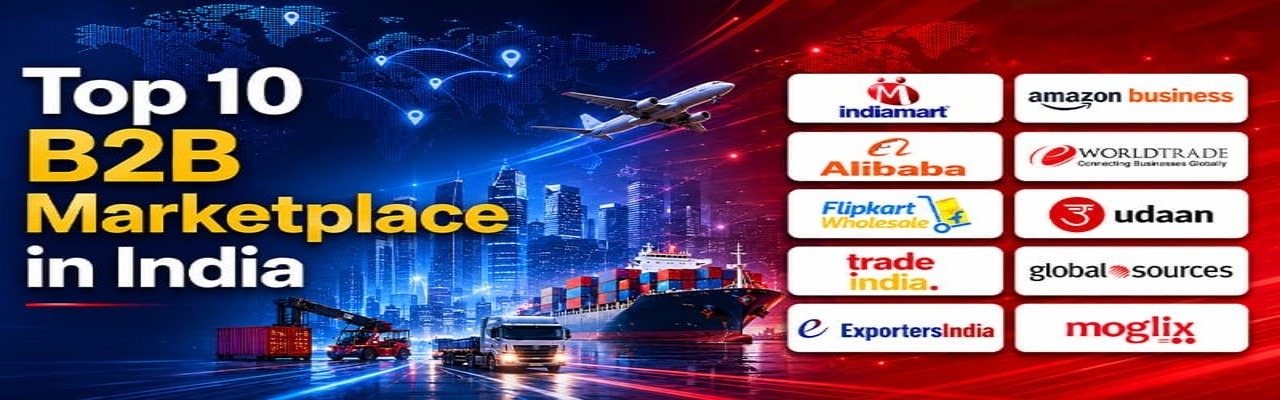
Do B2B marketplaces confuse you? Want to know how the top B2B marketplace in India can uplift your B2B business’s growth? For starters, online B2B marketplaces have revolutionized the B2B industry. Earlier, conventional B2B buying and selling required lots of time and energy. Plus, finding legitimate business inquiries used to be expensive, and there was no certainty if there would be any conversions. However, online B2B marketplaces have quickly changed the industry dynamic with their fast-acting methods and effective outcomes. There are countless benefits of online marketplaces, especially if you are in the e-commerce industry. No need to run before clients for conversion. Online marketplaces ensure that businesses will receive only verified buyer inquiries. Similarly, bulk buyers can interact with trusted suppliers after carefully evaluating their business’s authenticity. So, how is the top B2B marketplace in India connecting manufacturers, wholesalers, and MSMEs? B2B TradeMart, IndiaMart, Trade India, ExportersIndia, and others are leading marketplaces in India. These platforms offer many perks that make opting for online marketplaces a good idea. To know more about B2B marketplaces and their dynamics, keep reading the blog. Here, we have explained the top 10 B2B websites in India, the benefits and challenges of the top B2B marketplace in India, and the future opportunities they hold. Let’s start! What is a B2B Marketplace? A B2B marketplace is an online business-to-business platform where buyers and sellers connect and perform trade. In B2B marketplaces, companies exclusively buy or sell products and services of the B2B sector. In simple terms, B2B marketplaces are like Amazon or eBay, but for wholesale buying and selling. On such platforms, corporate trade is managed, especially for bulk purchasing and complex supply chain management. How B2B Marketplaces Work? Unlike regular B2C and D2C marketplaces, where individual buyers purchase a single product, a B2B marketplace is for bulk orders. Here, manufacturers, wholesalers, distributors, retailers, and suppliers connect to buy and sell in bulk. Offline or manual negotiations are ineffective in B2B marketing because these businesses require back-and-forth emails, spreadsheets, and digital tools to streamline trade. Top 10 B2B Marketplaces in India The following are the top 10 B2B marketplaces in India: B2B TradeMart B2B TradeMart is a trending B2B portal in India that connects MSMEs, large enterprises, wholesalers, and verified suppliers to streamline wholesale and corporate trade. It is a centralized hub for B2B buyers and sellers to scale their business with reduced marketing expenses and safe transactions. With B2B TradeMart, businesses can get several benefits, like: Secure Platform - B2B TradeMart prioritizes security by verifying business profiles and ensuring the authenticity of both buyers and suppliers. This ensures their platform is safe, as they have significantly reduced the risk of fraud or non-verified leads. Wider Business Reach - B2B TradeMart is a popular name as the top B2B portal in India because it allows businesses to display their business profile and product catalogs 24/7. This way, whether you belong to the manufacturing, wholesaling, or MSMEs business, you can expand your business’s reach to a wider audience. User-Friendly Interface - B2B TradeMart offers a user-friendly interface thanks to its AI-based recommendations and advanced filters. These filters help in creating a personalized layout for businesses. As a result, sellers can use the data-driven insights and analytics to optimize their pricing and business listings. Seamless Operation - B2B TradeMart has an integrated trade cycle that includes communication tools and an inquiry system, streamlining operations seamlessly. IndiaMART IndiaMART is one of the largest and most popular e-commerce marketplaces for trading goods and services online in India. The platform has dominated the market for decades, and the credit goes to its dedicated tools specifically designed for MSMEs. IndiaMART has connected over 10 million buyers and suppliers across 50+ industries. The platform is among the successful B2B sites in India due to the following reasons: Large Network - IndiaMART has an excellent track record of drawing businesses and verified leads. Small City Growth - The platform is unlocking entrepreneurial opportunities across India, especially in small Indian cities that serve as lifelines for regional businesses. Verified Platform - The platform is building trust among users in the B2B industry. They offer verified badges and Trust Seal certificates to ensure the authenticity of buyers and suppliers after thorough background checks. Detecting Buyer Requirements - The platform uses algorithms that detect buyers’ requirements and connect them with those suppliers who can provide them with the best results. TradeIndia TradeIndia is a well-established B2B marketplace that has a robust ecosystem of buyers and suppliers. Millions of MSMEs and large organizations have joined the platform to deal in 1 Lakh+ product categories. In addition, top B2B companies in India trust TradeIndia to manage their business networking, buyer leads, digital marketing, and website management. What’s more? TradeIndia is a leading name in wholesale marketplaces thanks to its expansive user base. With millions of registered businesses, the platform generates numerous business opportunities. The platform offers comprehensive solutions, including customized listings, online catalogs, secure transactions, and dedicated payment & account management systems. TradeIndia hosts and organizes trade events to offer both online and offline exposure to new and existing businesses. At these events, businesses showcase their products and services, both in person and virtually, and express their brand’s uniqueness in a competitive market. The platform fosters a secure, reliable environment with verified business listings and legitimate ratings. ExportersIndia ExportersIndia is known for its massive network of global buyers and suppliers. The platform ensures MSMEs gain global exposure by driving visibility and engaging businesses in mutually beneficial activities. Millions of verified buyers and suppliers promote a vast network. By joining ExportersIndia, businesses get instant recognition in the global marketplace. Get dedicated support for the business’s growth through inquiry tools, lead generation, and international trade navigation. Highlight your business authenticity indicators like certifications, product portfolios, awards, and other comprehensive profiles for competitive advantage. The SEO-friendly business model gives the business an organic exposure with better ranking in the top search engines. Amazon Business Amazon Business is a popular B2B marketplace in India that combines e-commerce convenience with technical expertise. Since the marketplace offers a familiar experience, specializing in procurement tools is not an issue for corporate buying and selling. The platform allows businesses to streamline operations. Tax & compliance solutions that enable businesses to list GST-enabled products, easily download invoices, and claim tax credits for bulk sales. The platform controls corporate purchasing, including spending limit management, purchase customization, expense adjustments, and approval workflows. Unlock bulk discounts and get better pricing on large orders or frequent buying. Amazon is a reliable name that ensures fast logistics through its doorstep delivery service. Alibaba India Alibaba India is one of the top 10 B2B portal in India that connects MSMEs with international buyers. The platform promotes cross-border trade. That’s why it is the best b2b portal for export business in India. Flipkart Wholesale To simplify bulk procurement, Flipkat Wholesale is a popular choice. The portal offers competitive prices and a diverse product catalog across several niches, including grocery, apparel, electronics, consumer goods, and more. Udaan Udaan is a revolutionary marketplace that empowers the MSMEs engaged in B2B buying and selling. The platform has eliminated supply chain intermediaries and offers highly competitive wholesale prices. JioMart Partner JioMart Partner offers bulk discounts to the neighborhood kiranas, hotels, and local small businesses. Other than that, digital procurement, door-to-door delivery, and the elimination of wholesalers help in streamlining business processes on this platform. Moglix Moglix offers a reliable business experience that is similar to Amazon’s. The digital fragmentation, industrial supply chain, and MSME-centric practices make it a suitable B2B portal in India. Comparison Table of Top B2B Marketplaces in India Below is the comparison table for the top B2B marketplaces in India: Platform Best For Industry Pricing App Available Export Support B2B TradeMart Manufacturers, suppliers, wholesalers Multi-industry  Free listing + paid promotional plans  Yes  Moderate export support  IndiaMART MSMEs, manufacturers, wholesalers Multi-industry Free basic listing / Paid premium plans Yes Limited international support TradeIndia Exporters and industrial suppliers  Industrial goods, textiles, machinery  Free + subscription plans  Yes  Strong export-import support  ExportersIndia Small exporters and MSMEs  Handicrafts, agriculture, and engineering  Free + premium membership  Yes  Dedicated export support  Amazon Business Corporate and bulk purchasing  Office supplies, FMCG, electronics  Free buyer account; seller fees apply  Yes  Moderate export capabilities  Alibaba India Global exporters and manufacturers  Multi-industry  Free registration; paid supplier packages  Yes  Excellent global export support  Flipkart Wholesale Retailers and resellers  Grocery, fashion, electronics  Free registration  Yes  No major export support  Udaan Kirana stores, retailers, distributors  FMCG, lifestyle, electronics  Free registration  Yes  Minimal export focus  JioMart Partner Grocery retailers and small shops  FMCG, grocery  Free registration  Yes  No export support  Moglix Industrial and B2B procurement  Manufacturing, tools, safety equipment  Custom enterprise pricing  Yes  Limited export support    How to Choose the Right B2B Marketplace? Trust, relevance, and scalability are the 3 core values that ensure a B2B marketplace's credibility. Choosing the top 10 B2B websites in India is based on your business goals, target audience, budget, and industry type. To select the best marketplace, top B2B companies do the following things: Identify their business needs Check the industry relevance Compare prices and membership plans Analyze buyer traffic and global reach Look for international trade and export opportunities How easy and manageable is the platform Evaluate the platform’s reviews and success stories Check if the platform is reliable For Manufacturers A platform that offers bulk lead generation, business expansion opportunities, and verified suppliers is ideal for manufacturers. TradeIndia, IndiaMART, B2B TradeMart, Alibaba India, etc., efficiently connect manufacturers with wholesalers, suppliers, and bulk buyers globally. For Retailers For retailers, an ideal platform must offer competitive pricing, quick & easy purchasing, fast delivery, inventory management, bulk buying, etc. For Exporters Exporters should focus on marketplaces that provide global visibility and support the export market. Access to global buyers and efficient export management facilities are perfect for exporters. For Small Businesses Small businesses need affordable top B2B companies in India that generate growth opportunities, along with a simple onboarding process to increase their online visibility. For Industrial Procurement Platforms that use the right tools, bulk procurement solutions, safety measures, and specialized technologies are ideal for industrial procurement. The top b2b lead generation companies in India support expansive product catalogs and business solutions. Benefits of Using B2B Marketplaces The following are the benefits of using B2B marketplaces: Faster Supplier Discovery The best B2B platforms make it easy for businesses to discover verified manufacturers, wholesalers, and suppliers on a single platform. Now, companies can easily compare suppliers, their product catalogs, pricing, reviews, and other information without requiring excessive manual effort, saving both time and money. Reduced Operational Costs By reducing marketing, procurement, and communication expenses, the top 10 B2B portal in India is helping businesses in reducing their operational costs. Additionally, profit margins are increasing through bulk purchasing, direct communication with suppliers, competitive pricing, and manageable operational costs. Scalable Procurement MSMEs, wholesalers, suppliers, and bulk buyers get the support they need from B2B marketplaces. The platforms allow them to access a wider supplier network and bulk inventory options. This allows businesses to scale their procurement without worrying about arranging a heavy investment to source seams and prepare infrastructure. Better Business Networking The top B2B lead generation companies in India trust B2B marketplaces for better business networking, as the platforms are ideal for connecting manufacturers, retailers, exporters, and distributors from various industries and regions. As a result, businesses build long-term partnerships and find new opportunities to expand their network via trade inquiries and direct interactions. Challenges of B2B Marketplaces The top B2B marketplace in India is best known for offering convenience and opportunities for business expansion. However, there are some challenges that even the top marketplace faces. Like any industry, even the best B2B platforms face setbacks. Since the industry is dynamic, challenges will surely occur. There are some limitations that every business must be aware of before commencing B2B buying and selling. The challenges of B2B marketplaces are: Fake Suppliers Unverified or fake suppliers are among the most pressing challenges that B2B companies in India face when seeking business expansion opportunities on B2B marketplaces. Sometimes sellers provide false or misleading information, product details, or certifications, or, worse, disappear after receiving payment. As a result, businesses face order delays, financial losses, and broken business relationships. This is why verifying the supplier’s authenticity is a must. Always look for proof of legitimacy, such as reviews, certifications, and company information, before finalizing transactions. Price Competition Since multiple suppliers offer the same product category on the same platform, competition is higher in B2B marketplaces. This often leads to price wars between suppliers and pressures them to reduce their profit margins to attract more buyers. Such strategies often become challenging for small businesses, as they struggle to stay competitive with large companies offering bulk discounts and competitive pricing, while small businesses are barely making anything. Quality Control Issues Dealing with unknown suppliers online can be tricky, as there is no certainty that they will maintain consistent product quality or that the product will be up to the mark. It is often the case that the product images and descriptions do not match the actual product delivered to customers. In fact, businesses may receive poor-quality, defective, or low-standard goods, which may disrupt operational efficiency and fail to satisfy customers. So, to eliminate quality issues, proper sample testing and the product’s quality evaluation are a must. Shipping Delays In B2B operations, delivering the products and services on time is important. However, delivery delays are quite common in the top B2B marketplace in India. Inventory storage issues, logistics challenges, customs clearance issues, and poor supply chain management are among the major reasons for shipping delays. The entire product schedule and operational costs are disrupted by delivery delays. This negatively impacts a business’s reputation due to issues of commitment. Future of B2B E-commerce in India The future of B2B ecommerce in India shows great potential and promising growth. With relentless digital transformation, internet dominance, adoption of online business models, and the ability to target the right market niches, the future looks promising for manufacturers, wholesalers, retailers, exporters, and suppliers. Conventional procurement methods are nearing their end as businesses seek faster, more efficient platforms, such as digital marketplaces. The future holds lots of benefits that could be due to the following reasons: Digital Marketplace Growth The future of B2B marketplaces is expected to grow significantly as B2B businesses will rely on online sourcing and bulk purchasing. Online marketplaces make procurement easier and more transparent by helping suppliers in India and abroad. Increase in MSMEs Micro, Small, and Medium Enterprises will continue to choose B2B marketplaces for e-commerce, as these platforms help expand their reach and reduce operational costs. With digital platforms, small companies can compete with big names in the industry, as the top B2B marketplace in India provides them access to a wider customer base and helps them connect with better suppliers. AI Integration and Automation AI, data analytics, and automation play an influential role in deciding the future of B2B e-commerce in India. Businesses will use powerful tools to forecast the scope of improvement for an efficient customer experience, including automated inventory management, AI-powered recommendations, chatbots, and demand forecasting. Cross-Border Trade Expansion Indian businesses are making every effort to enter the global market to increase their brand’s visibility internationally. The future of e-commerce in B2B marketplaces will increase opportunities to connect Indian businesses with international audiences. With cross-border trade opportunities, manufacturers and exporters will expand their businesses by connecting directly with international buyers. Digital Initiatives Supported by the Government The Government of India has launched many initiatives to encourage startups and MSMEs. Digital India and Startup India are among the schemes launched to encourage businesses to adopt e-commerce platforms. In addition, GST implementation is also benefiting businesses. The government initiatives are improving transparency, supporting e-commerce growth, and simplifying taxation for businesses across India. Conclusion In conclusion, as the top B2B marketplace in India, we can see that B2B platforms connect buyers and suppliers to ensure hassle-free trade. These platforms are efficient for bulk trade among wholesalers, manufacturers, retailers, suppliers, and bulk buyers. Conventional B2B trading methods had loopholes and were extremely exhausting. But online marketplaces are great for streamlining business processes. IndiaMART, ExportersIndia, Trade India, B2B TradeMart, Amazon Business, Flipkart Wholesale, and others are among the top B2B companies dominating the B2B e-commerce industry in the best ways possible. Choosing among them is not challenging. You just have to be clear about your requirements for the marketplace before deciding which one will be best for you. Whether you are a manufacturer, retailer, or exporter, the B2B ecosystem offers a range of options. Furthermore, the top B2B marketplaces in India offer benefits such as faster supplier discovery, reduced operating costs, scalable procurement, and improved business networking. These benefits will help expand your business. However, there are some challenges with online marketplaces that become hurdles for businesses. Shipping delays, price competition, fake suppliers, and quality control issues are among the most pressing problems that B2B marketplaces face. Moreover, the future of these marketplaces offers countless opportunities for businesses’ growth. So, every business should put its interests on these platforms and trust the process. The future will offer countless business opportunities that will take B2B buying and selling to the next level.

spices manufacturers in India

Top 10 Spices Manufacturers in India

Indian cuisine is incomplete without spices, as their rich, flavorful notes make it more appetizing. The top 10 spices manufacturers in India are dominating the Indian markets. Their spices are widely consumed across the globe, thanks to their authentic flavours, rich aroma, and natural colours. The list of spice manufacturers in India is quite long. Some even export local tastes and flavourful spices globally. Many leading names are engaged in spice exports. The blog is about the top 10 spices manufacturers in India. Find out why India is called the hub of spice manufacturing, the leading spice manufacturer, the manufacturing process, the future of the spice industry, and more. Let’s dig deeper! Why is India the Hub of Spice Manufacturing? India is known as the hub of spice manufacturing because it dominates the global spice market, both in manufacturing and exporting spices. 70% of the world’s spice varieties are cultivated and manufactured in India. India produces around 75 spices out of the ISO recognized 109 varieties. Moreover, the advanced infrastructure, agricultural expertise, and beneficial government schemes and initiatives support India’s dominance in spice agriculture. With such persistence, India shall continue to be the hub of spice manufacturing. Many established and new spice manufacturers will join the list of the best spices manufacturers in India. But what drives India to be a hub for the spice trade? The following factors help India become a hub of spice manufacturing: Incomparable Diversity in Agricultural Techniques Every year, India produces a variety of spices, nearly 12 million metric tons. The majority of the spices in the list are turmeric, red chili, coriander, cumin, and cardamom. Every spice is grown under different climatic conditions, including microclimates in states like Andhra Pradesh, Gujarat, and Rajasthan. Production that Adds Value to the Output India has moved beyond raw techniques for bulk exports and adopted the latest technologies for the operation and processing of spices. More than 50% of India’s spice revenue is generated from spices, spice blends, and natural oils extracted from spices. Strictly Maintained Safety Standards and Product Quality India’s post-harvest infrastructure strictly adheres to safety standards to ensure product quality. Steam sterilization, sorting methods, strict cold-storage facilities, and other methods. To make sure India’s spices meet international food standards, maintaining the product’s safety is necessary. Backed by Certified Institutions Every spice manufacturing company in India is backed by the Spices Board of India, which ensures that every export meets global quality standards. These institutions help increase India’s spice exports by promoting trade worldwide. Types of Spice Manufacturing Companies in India FMCG companies, organic spice producers, private labels, bulk exporters, and institutional suppliers are among the types of spice manufacturing companies in India. These types are categorized based on the company’s size, scale, target market, and specialization. The function of each type of company varies. Here’s what these companies do: FMCG Companies The FMCG spices companies in India target retail markets. That’s why they dominate almost every Indian household. These companies produce and manufacture whole and powdered spices. Everest, MDH, Catch, Badshah, and other FMCG brands are among the top 10 spices manufacturers in India. Organic Spice Producers The organic spice producers deal in organically grown and manufactured products. Farmers avoid pesticides and GMO practices in the production of spices. Only sustainable techniques are used for production. Typically, health-conscious consumers prefer organically manufactured spices. Organic Tatva, Tata Sampann, Organic India, etc., are some organic spices manufacturers in India. Private Labels Private labels work on a contractual basis. These companies handle the manufacturing and packaging of spices for other brands or retailers. You can mostly find their products in supermarkets, chain restaurants, and hotels. Overall, private labels offer customized spice blends and packaged products to meet clients' demands.   Bulk Exporters Bulk exporters are more focused on the bigger picture, i.e., international exports. These companies supply a variety of spices globally, including whole, raw, and powdered spices. Some examples of India’s bulk spice exporters include MDH, Everest, Sadbhav, and Vora Spice Mills. Institutional Suppliers The institutional suppliers of spices deal with B2B clients in bulk. Their products are tested and qualified by laboratories and are hygienically packed. Usually, institutional suppliers deal with corporate caterers, 5-Star hotels, and renowned restaurant chains. Badshah Masala, Everest, Aachi Masala, Synthite Industries Ltd., etc., are among the top institutional spice suppliers in India. List of Top 10 Spices Manufacturers in India There are countless brands leading the spice markets. Some of these brands have become global names and have significantly contributed to India’s exports. Spices are one of the top 10 product export from India . Thanks to the leading spices manufacturing companies in India, our spices are globally acknowledged and demanded worldwide. Below are the top 10 spices manufacturers in India: MDH Spices Recognized by the tagline “Asli Masale Sach-Sach: MDH”, this spice brand is the leading icon in the Indian spice industry. This 107-year-old spice manufacturing company offers an extensive range of whole, single, blended, and powdered spices representing the brand’s legacy. Indian consumers prefer MDH spices due to their strong, pungent flavours. Every spice is produced under strict quality control, and all hygiene standards are maintained during production. Overall, MDH spices consistently serve quality products to both domestic and international consumers. That’s why millions of Indian households trust the authentic flavours of MDH. Everest Spices Everest Spices is one of the top 10 spices manufacturers in India, popular in India and international markets. Going with the tagline “Taste Mein Best, Everest”, their spices hold a strong brand reputation, thanks to their consistent product quality and wide range of whole, powdered, and blended spices. Everest has an extensive distribution network that speaks to the brand's global presence. This spice manufacturing company is firm with its raw material sourcing, quality control, and hygiene processing. Everest has earned the trust of its consumers and has become a household name in India. The brand has used premium raw materials for decades. This is why Everest is a leading player in the packaged spice manufacturing industry. Tata Sampann Tata Sampann is a trusted Indian spice brand that is known for its “Sarvagunn Sampann” characteristic. This spice manufacturing company deals in premium-quality spices and assures that the natural oils in its spices are retained throughout the manufacturing process. Thus, the flavours and nutritional value of every spice stay intact. This spice manufacturing company is powered by TATA, a trusted Indian brand. So, leave no doubt regarding the authenticity of their spices. Every product goes through rigorous testing and quality checks. Additionally, Tata Sampann also deals in organic spices that deliver an authentic taste. Catch Spices (DS Group) “Catch ka koi match nahi”! With this tagline, Catch Spices has become one of the top 10 spices manufacturers in India, globally recognized by Indian households. The brand is one of the leading spice manufacturers, recognized for its high-quality spices and consistent taste. Catch Spices uses efficient techniques such as low-temperature grinding and unique packaging to preserve the natural aroma and flavour. With a vast distribution network and a diverse range of spices, Catch has gained the trust of Indian and Global consumers. Badshah Masala Badhash Masala is one of the most popular spice manufacturing companies in India. The brand offers a wide range of blended, whole, and powdered spices. Going with the tagline “Swaad Sugandh ka Raja”, Badhshah Masala has been serving naturally flavourful and aromatic spices since 1958. The brand deals in spices that capture authentic flavors, preserving the natural aroma. Additionally, Badhshash Masala maintains strict quality standards across its entire spice range. Every ingredient is sourced from trusted farms, and it has been ensured that its nutritional value, taste, and aroma are untouched. Overall, you will find Badshah Masala’s aromas oozing from Indian households, restaurants, food chains, and local food stalls, as it has a loyal customer base in India and abroad. Organic India Spices Moving on to the top 10 spices manufacturers in India, Organic India makes it to the list. Since a large number of Indian consumers are switching to sustainable food ingredients, organic spices have made an impactful place. Organic India spices are cultivated from organic farming practises. Therefore, they are free from harmful chemicals and pesticides. Plus, are absolutely healthy for your health. As its tagline says, "Sirf Naam Se Nahi, Kaam Se Organic", the brand focuses on purity. They source high-quality ingredients that offer many health benefits. Organic India is committed to organic agriculture and being responsible towards the environment. Thus, every health-conscious consumer of Indian spices considers Organic India one of the best organic spices manufacturers in India. Goldie Masale Goldie Masale is one of the trusted spice masala manufacturers in India. The brand offers a wide range of blended and whole spices. Every ingredient is of premium quality and is carefully selected. Goldie Masale believes in building a trustworthy relationship with their consumers; thus, its tagline is “Jahan Jaye Rishtey Banaye”. Overall, Goldie Masale has an extensive distribution network, and the brand focuses on delivering authentic taste. Eastern Condiments Moving on with this list of spices manufacturers in India, Eastern Condiments is among the top spice exporters. This spice manufacturing company is popular for selling authentic South Indian flavours to Indian and international markets. Eastern’s known for its aromatic spices. Plus, their pre-blended masalas like Sambar Masala, Chicken Masala, Meat Masala, etc., have rich flavours and aroma. Aachi Masala Aachi Malasa is one of the top 10 spices manufacturers in India. Their authentic flavours and value-for-money spices are the reason behind their fast-growing popularity. The brand is popular for introducing consumers to authentic South Indian flavors. The company offers spice blends, whole spices, and ready-to-cook products while keeping its heritage alive. Aachi Masala combines modern techniques and traditional recipes by simultaneously maintaining their flavour’s authenticity. That’s why consumers who prefer South Indian cuisine trust this brand in both domestic and international markets. Ramdev Spices Ramdev Food Products is among the top 10 spices manufacturers in India. The brand offers premium-quality spices that enhance the flavors of Indian cuisine, especially its hing (asafoetida), which adds richness to a simple dal tadka. Moving on, Ramdev spices focus on purity and quality. That’s why their spices retain their authentic taste and are free of harmful ingredients. Overall, it is a great spice brand with an effective distribution network serving customers in India and overseas. How to Choose the Best Spices Manufacturers in India? After learning about the top 10 spices manufacturers in India, let’s move on to the next part. Before understanding the spice manufacturing process, understand how to choose the best spices manufacturers in India. Make sure to understand the basis of your evaluation. Here’s what you can ask the manufacturer: Verify Quality Certifications and Clearance FSSAI, ISO 22000, HACCP, BRCGS, and others are some of the certifications a food product may hold. All trusted spices manufacturing companies in India have these certifications. These certifications are used to verify the product’s quality and authenticity. If any company gives you these certifications, it means they have clearance to sell their products and that the products are safe to consume. Evaluate Sourcing Practices In the next step, you should evaluate the sourcing practises of the products. It would be best to purchase from reputable manufacturers, as they source spices from established, traceable regions. These manufacturing companies deliver fresh, natural products sourced through transparent practices. From farm to finished product, every step becomes trustworthy, thanks to the brand’s credibility. Review the Latest Lab Test Reports to Match Product Standards The next thing that is essential to evaluate the top 10 spices manufacturers in India is reviewing the quality standards of the product. For that, you should conduct batch-wise lab testing to detect moisture, pesticides, contaminants, and microbes in the spices. Apart from that, you must check whether the company meets the quality standards for hygiene processing facilities. Every modern piece of equipment used for cleaning, grinding, blending, or packaging should be up to the mark. Every manufacturer is required to use GMP (Good Manufacturing Practices) to maintain strict quality checks through the spice production process. Try Sample Products to Access Product Quality Ensuring the product fulfills its promised objectives is a must. To ensure that, you can try sample products. Sample products can help you assess the product’s quality. You can check the natural colour, aroma, flavour, freshness, portion size, and the absence of any foreign agent or adulteration by evaluating the sample. Check the Packaging Option Reputed spice manufacturing brands use the best packaging methods to preserve freshness and extend their product’s shelf life. Make sure to check the available packaging options, which make it easy to transport the product. Typically, spice manufacturers prefer retail pouches, bulk packaging, private-label packaging, and custom brand packaging options. Look for Brand’s Reputation and Experience Customers are usually drawn to brands they have heard of. Naturally, it is always easier to trust a brand that has been serving for years than a newly established brand. Look for a spice manufacturer who has been in business for years. Check their customer reviews to evaluate the brand’s reputation. Find out its export history. The experience it has gained to increase industry recognition also matters. Ensure the Product Capacity A manufacturer’s tendency to pull out solutions reflects on the product’s capacity. An ideal spice manufacturer must meet ordered volumes by the specified deadline and consistently deliver products on time. Additionally, the manufacturer must handle seasonal demand without compromising the spice’s quality. Understand Pricing There is no certainty that the lowest-priced spice will always have the poorest quality, or that a higher-priced spice will be the best. Simultaneously, picking the lowest prices isn’t always a wise decision. You must understand the pricing, as it can help you better determine the product’s quality and specifications. Many spice masala manufacturers in India decide the product’s price on the basis of their manufacturing cost, production, sourcing, packaging, advertising, certification, logistics, and other factors. Check the spice’s quality, certifications it holds, logistics, and after-sales support to make an informed decision. Whether the Brand Complies with International Export Standards If looking for a spice manufacturing company that exports goods overseas, make sure to check if they comply with international export regulations. A COA (Certification of Analysis), export documents, and other certifications are necessary for exporting spices Prioritize Food Safety Nowadays, food contamination is quite common due to international scrutiny, especially in exporting countries. Make sure to pick trusted spices manufacturers in India who perform robust quality control testing to prioritize food safety. These brands assure their spice’s quality rather than using their brand’s long-running reputation. What is the Spices Manufacturing Process in India? The top 10 spices manufactures in India ensure that their spice manufacturing process is up to the mark. These companies oversee every step of the manufacturing process under careful, controlled supervision. Meeting the food safety standards is necessary. Thus, the natural flavour, aroma, colours, and quality of the spices should not be compromised during the manufacturing procedure. Different spices have different manufacturing processes. However, the pattern is somewhat similar. The following are the basic steps involved in the spice manufacturing process in India: Step 1: Sourcing and Managing Raw Materials In the first step of spice manufacturing, manufacturers source raw materials, i.e., whole spices, directly from farms, agricultural markets, and spice-growing hubs. After that, they take samples of the raw materials for quality inspection, during which the spice's quality, purity, and moisture are examined. Step 2: Cleaning and Sorting After determining if the spice’s quality is up to the mark, the spices are sent for the cleaning process to remove any dust, stone particles, leaves, stems, husks, or other impurities from the spice. The top spices manufacturers in India use advanced technology to clean spices and eliminate impurities. Some sorting machines used for cleaning the spices are: Air classifiers Vibratory sieves Magnetic separators Gravity separators Step 3: Drying Spices This step is important to extract any excess moisture from the spices. Traditionally, the spices were dried under natural sunlight. As spice production has increased in recent years, manufacturers have opted for drying machines. These machines operate in controlled modes to promptly remove excess moisture. These machines help the manufacturers in multiple ways, such as: Prevention of mold growth Enhancing the spice’s shelf life Preserving the natural flavour and colour Preparing the spices for the next step, i.e., grinding Step 4: Grinding the Spices In this step, the whole spices are ground into coarse or fine powdered form. Top spices companies in India use industrial grinding machines that carefully grind the spices. These machines operate at a controlled temperature to prevent heat from being generated during grinding. This way, the natural oils, taste, and aroma stay intact. Step 5: Blending Spice Mix (If Required) Some of the best spices manufacturers in India sell spice blends, like garam masala, chaat masala, kitchen king, chole masala, chicken masala, and other curry masala. These spices are a composition of multiple spices, depending on the standard recipe requirements. Spice manufacturers have installed machinery with an automated blending system that precisely takes the right amount of each spice to make a consistent blend in every batch. Therefore, the flavour is always the same. Step 6: Quality Checks Before the spices go for packaging and are dispatched for selling, the spices companies in India ensure the quality of the final product. A small portion of the manufactured spice batch is set aside for lab testing, where the quality team assesses its quality. They perform several tests to ensure that the spice’s quality is maintained throughout the manufacturing process. Here’s what they ensure: Moisture content of the spice Spice particles’ size Colour consistency Flavours and aroma of the spices Microbiological safety Screening to determine any adulteration or food contamination The top 10 spices manufacturers in India are popular for conducting rigid lab testing to check if their spices comply with the domestic standards and international export regulations. Step 7: Packaging Once the spice batch passes quality testing, it is processed for packaging. In this step, the automated packaging machine packs the spices and applies a label with all essential details for each spice, such as nutritional value, batch number, manufacturing date, shelf life, and other regulatory information. Additionally, these machines are designed to prevent moisture, light, and air from entering the packaging. Some popular kinds of spice packaging include: Retail pouches PET jars Plastic containers Private-label packs Bulk bags Step 8: Storage and Distribution Lastly, the packed cartons are transferred to warehouses for storage before being dispatched to wholesalers, retailers, exporters, and bulk buyers. The manufacturer ensures that the warehouse is clean and suitable for keeping the product safe. How is the Growth of Organic Spices Manufacturers in India? Rapid growth has been observed among organic spices manufacturers in India over the past few years. In fact, organic spice manufacturers have been making a significant contribution to satisfying the market demand for Indian spices from a health perspective. Since organic spices are sustainable and free from harmful additives, their domestic demand and export opportunities are increasing. According to recent studies, India's organic spices market was valued at approximately $1 billion in 2025. By 2026, the compound annual growth rate will be nearly 6%, allowing the organic spice market to reach approximately $1.5 billion. Reason Behind the Increasing Demand for Organic Spices Health awareness among consumers Pesticide- and chemical-free production Value for money Brand reputation Environmentally sustainable Government certification and support program Premium product positioning Traceable Safe to consume Key Growth Drivers for Organic Spice Manufacturing in India Increasing Health Awareness: The demand for organic products are increading as consumers are now more concerned about their health. Organic spices are free from artificial colours, flavours, and preservatives. Plus, the absence of synthetic chemicals and pesticides makes them a sustainable choice. Rising Export Demand: Demand for Indian organic spices is increasing in international markets. Consumers worldwide are opting to import certified organic spices from India. Thus, the top spices manufacturers in India are exporting organic products overseas. The United States of America, Canada, the United Kingdom, Australia, Germany, and others are among the countries demanding Indian organic spices. E-commerce Expansion: Access to organic spices has become much more convenient, thanks to online grocery platforms and D2C brands. Today, companies are leveraging online sales to reach their target audience across remote and international locations. Support from Government: The Government of India runs many certification programs, export promotion initiatives, and organic farming initiatives to encourage organic farming manufacturers to enter the market and sell their products both domestically and internationally. Premium Pricing: Since organic products are free from harmful agents and are a sustainable choice for health, the manufacturers set the prices slightly higher. This premium pricing helps improve profitability by increasing revenue. Manufacturers focus on maintaining the spice’s quality and complying with regulatory standards by keeping the pricing high. What is the Future of the Spice Industry in India? India’s spice manufacturing industry holds a bright future in the coming years. India is one of the world’s biggest producers, consumers, and exporters of spices. Plus, rising global demand, advanced technology, and a preference for Indian food and spices are making growth promising. Increasing Global Demand The global demand for Indian spices is expected to grow, given their importance in Indian cuisine and their medicinal properties. Global markets import Indian spices, as spice manufacturers deal in traceable, premium-quality spices. Growth in Value-Added Products Apart from dealing in raw spices, Indian spice manufacturers also export value-added products made from whole spices. Plus, manufacturers earn higher profit margins in the market, thanks to global demand and competition. Foreign markets have a great demand for Indian spice-based products, such as: Spice blends Seasonings Essential oils Ready-to-cook spice mix Oleresins Expansion of Organic Spices Organic spice manufacturing companies will also grow in the near future. The growth may be steady, but it is indeed predicted as the environment and health-conscious consumers will definitely look for sustainable options. Plus, demand for organic spices in international markets is predicted to increase as organic spice manufacturers comply with international regulations. Rising technology Adaptation The top 10 spices manufacturers in India are known for adapting modern technology in their manufacturing procedures. Surprisingly, their competitors are also following suit to stay in the game. Thus, they are switching to modern processing technology, automated packaging, quality inspection, digital supply chain management, and online selling. As a result, spice manufacturers in India are improving their production efficiency and delivering traceable, high-quality products. Potential Opportunities in the Export Industry India is one of the primary exporters of spices worldwide. The top 10 spices manufacturers in India export quality Indian spices to more than 180 countries. The USA, the UK, Australia, the Middle East, Japan, Canada, and the European Union are the top consumers of Indian spices. Demand will continue to grow as Indian spices are known for their authentic flavours, taste, aroma, and colours. Government Support The government takes many initiatives to support Indian spice exports at every step, be it sustainable farming, processing, quality certification, or promotion. These support initiatives help spice manufacturers strengthen their businesses and ensure long-term growth. The government has shown keen interest in spice manufacturers specializing in organic spices, as it expands the scale of organic farming in India. Additionally, many government schemes are helping small spice manufacturers in gathering funds and improve agricultural practices to help their businesses grow. E-commerce Growth Many online grocery platforms and D2C brands have experienced significant growth by making premium-quality spices accessible to everyone. As a matter of fact, online selling platforms have the potential to reach a wider audience in remote as well and international regions efficiently. Stepping Towards Sustainable Farming The top 10 spice manufacturers in India are popular for adopting sustainable manufacturing processes. Every step is taken with the environment’s sustainability in mind, from farming, sourcing, and producing to packaging and transporting the spices. Manufacturers are increasingly focused on eco-friendly packaging, water conservation, and responsible practices in spice manufacturing. Possible Challenges Despite the highlights of spice manufacturing, there are some possible challenges that a manufacturer must address to prevent major losses. If the challenges are predicted in advanced, taking measures to tackle them will be easy. Some possible channels could be: Affected crop yields due to changes in the climate Fluctuations in the pricings of raw materials Strict quality standards imposed by international markets Disturbed supply chain management Competition from other countries involved in spice exports Conclusion In conclusion, the top 10 spices manufacturers in India are playing a keen role in making India a hub for spice manufacturing. An ideal spice manufacturing company ensures it follows the necessary measures. They follow the standardized practices to preserve the natural taste, colour, flavour, and aroma of their spices during the manufacturing process. Furthermore, India’s organic spice manufacturers are adopting sustainable practices to meet the needs of environmentally conscious consumers. Plus, organic spices have a high profit margin thanks to premium pricing. E-commerce plays a vital role in raising awareness. Overall, Indian companies engaged in spice manufacturing will experience significant growth if they anticipate potential challenges and take timely measures to address them.

Top Trending Products 2026, B2B Marketplace Products

Top Trending Products In B2B Marketplace 2026

In 2026, Indian businesses are increasingly using B2B platforms to access new markets and connect with potential buyers. However, many businesses face one important question: What products should they sell on a B2B marketplace? With thousands of products online, identifying those with consistent demand and long-term growth potential can be challenging.  Succeeding in the B2B marketplace is not only about creating a seller account but also about choosing the right products. Selling top trending products in a B2B marketplace is important for several reasons.  It can help businesses generate recurring bulk orders, build long-term buyer relationships, and scale up their operations. On the other hand, selecting products with limited demand or intense competitive markets can make it difficult to achieve sustainable growth.  In this blog guide, we share the most trending products to sell on B2B marketplaces in 2026, why these product categories are in high demand, and practical tips to help businesses choose the high demand products and start selling successfully in the competitive B2B marketplace.   Why Choosing the Right Product Matters in a B2B Marketplace? Selecting the right product matters, especially in the B2B Marketplace for several reasons. Choosing products with strong and consistent market demand can help businesses attract bulk buyers, improve profitability, and establish a sustainable presence in the marketplace. Here are the key reasons why selecting the right product matters in a B2B marketplace: Higher profit margins: Trending products often experience strong demand, allowing businesses to sell in bulk, optimize pricing and achieve better profit margins.  Recurring bulk orders: Products that businesses regularly need, such as packaging materials, industrial supplies, and raw materials, generate repeat orders and create a steady revenue stream.  Competitive advantage: Selling products that align with current market trends helps businesses attract more buyers, stay ahead of competitors, and respond quickly to changing customer needs.  Easier business scalability: Selling profitable B2B products with stable demand allows businesses to increase production, expand into new markets, and diversify their product portfolios as they grow.  Top Trending Products to Sell in the B2B Marketplace in 2026  The demand for B2B products continues to evolve as industries adopt new technologies, prioritize sustainability, and expand into global markets. Here are the top trending products in India to sell in the B2B marketplace in 2026:  1. Agricultural Products   Agriculture continues to be one of the largest contributors to India’s economy and remains a key driver of exports. India is among the world’s leading producers and exporters of agricultural commodities, creating significant opportunities for manufacturers, traders, and exporters. So, naturally, there is a huge demand for agricultural products.  Moreover, there has been a significance for the agricultural sector from the Government of India through various schemes. Today India is one of the largest exporters of rice in the world.  Trending agricultural products include:  Rice  Wheat  Pulses  Spices Fresh fruits and vegetables Organic food products Why they are trending: Rising global demand for food and organic products.  Government support through agricultural export policies.  Strong demand from food processing companies and wholesale buyers.  High export potential in international markets.  2. Sustainable & Eco-Friendly Products Due to stricter regulatory frameworks and requirements, there is now greater demand for sustainable and eco-friendly products. Many businesses are increasingly investing in the production of sustainable and environmentally friendly products.  Biodegradable products and single-use items, such as disposable plates, glasses, spoons, and paper tissues, are in high demand.  There is also demand for solar products and items made with renewable energy sources. Smart wearables and fitness equipments are some of the top trending ecommerce products in India.  Trending eco-friendly products include: Recycled products made using recycled materials.  Compostable tableware. Bamboo products.  Eco-friendly office supplies.  Why they are trending: Increasing environmental awareness worldwide.  Government restrictions on plastic waste.  Growing adoption of sustainable procurement by businesses.  Strong export demand for green products.  3. Industrial Tools and Machinery India today produces and manufactures so many products. Manufacturing these products requires industry-standard tools and machinery. There is a need for CNC machines, welding tools, general equipment, hydraulic machines, and other such tools. Businesses can directly provide these industrial tools and machinery to other manufacturers and factory owners.  Trending products include: Power tools  CNC machines Welding equipment  Industrial pumps Air compressors Factory automation equipment  Why are they trending: Growth in manufacturing industries.  Increased investment in industrial automation equipment.  Government initiatives such as Make in India.  High-value bulk purchases by industrial buyers.  4. Packaging Materials  There is also a demand for packing materials from different businesses. Every manufacturing, retail, pharmaceutical, and e-Commerce business relies on quality packaging materials for storage, transportation, and branding.  As online commerce continues to grow, packaging products remain one of the most stable B2B categories.  Trending packaging materials include:  Corrugated boxes Plastic containers Stretch films Bubble wrap Product labels Sustainable packaging solutions Why they are trending: Rapid growth of e-commerce and logistics. Increasing demand for the FMCG and pharmaceutical industries. Shift toward recyclable and sustainable packaging. Recurring bulk orders from businesses. 5. Health & Safety Equipment Health and workplace safety have become a major priority across industries such as manufacturing, healthcare, construction, and oil & gas. There is a reason behind the increase in demand for health and safety equipment.  Today, it has become increasingly important for businesses to comply with safety regulations, leading to increased demand for protective equipment.  Trending products include:  PPE kits Safety gloves Industrial helmets Safety shoes  Fire safety equipment Medical supplies  Why they are trending: Mandatory workplace safety regulations. Growing healthcare and industrial sectors. Increased awareness of employee safety. Continuous replacement and repeat purchases. 6. MSME-Centered Products  India’s Micro, Small, and Medium Enterprises (MSMEs) contribute significantly to the manufacturing sector and exports. Many products produced by MSME industries enjoy steady demand from wholesalers, retailers, and industrial buyers.  Trending products include:  Stationery products Furniture Fasteners Engineering components Plastic goods Electrical fittings  Why they are trending: Strong domestic manufacturing ecosystem.  Government support for MSMEs. Affordable production costs.  Growing demand from infrastructure and industrial sectors.  7. Technology and Electronic Components Technological advancement has led to demand for so many different products and components. Digital transformation, electric vehicles, automation, and consumer electronics continue to fuel demand for electronic components worldwide. So businesses involved in electronic manufacturing and assembly require reliable suppliers for these products. Trending products include: Semiconductors  PCB boards Sensors LED components Electrical connectors  Batteries  EV components  Why they are trending: Rapid adoption of smart technologies. Growth of electric vehicle manufacturing.  Expansion of consumer electronics.  Increasing industrial automation.  8. Textiles and Indian Handicrafts  India’s textile and handicraft industries remain among the country's largest export sectors. High-quality fabrics, home furnishings, and handcrafted products continue to attract buyers from international markets due to their craftsmanship, affordability, and sustainability.  Trending products include: Cotton fabrics Home textiles  Carpets and rugs Silk products Leather goods  Wooden handicrafts Handloom products Why they are trending: Strong international demand for Indian textiles  Growing demand for handmade and sustainable products.  Competitive pricing in global markets.  Significant opportunities for exports across Europe, North America, and the Middle-East.  Step-by-Step Guide to Selling Products in a B2B Marketplace Choosing the right products is only the first step toward building a successful B2B business. To attract buyers and generate consistent sales, you need the right business strategy, legal compliance, and optimized product listing.  Here is the step-by-step guide: The first step is to choose the right product category among the trending products.  After this, research the market demand for the product which you are planning to sell.  If you have not already, then register your business for selling the product. A legally registered business enhances credibility and is often required for selling on B2B marketplaces.  Obtain the necessary registration and licenses, such as GST registration, FSSAI certification, MSME registration, ISO certification, and any other approvals required for your industry.  You must prepare a well-organized product catalogue, including high-quality images, detailed descriptions, technical specifications, pricing information and minimum order quantities (MOQs).  You need to join a trusted B2B marketplace platform. B2B Trademart is one such platform which links skilled suppliers, manufacturers, and service providers with domestic and international consumers of different products.  Conclusion In 2026, you can choose from several trending B2B products. There is no single “best” product to sell in a B2B marketplace . The right choice depends on your investment capacity, industry expertise, target customers, and long-term business goals.  Start with one or two high-demand products, understand your target market, optimize your product listings, and gradually expand your catalog as your business grows. The opportunity to sell top trending products through the B2B marketplace has never been greater. We at the B2B Trademart can be your partner and help you successfully sell your products online.