Trade Insights

How Does PM Gati Shakti Support B2B Manufacturers in Reaching New Markets?

B2B Rupal Rawat
9 min read
How PM Gati Shakti Supports B2B Manufacturers in India
9 min read Updated 30 Jul 2026
Share:

PM Gati Shakti Yojana is a multimodal connectivity program to empower the interactive Geographic Information System through roads, railways, ports, airways, waterways, and logistics infrastructure.

But how PM Gati Shakti master plan support B2B manufacturers in reaching new markets?

Infrastructure plays a crucial role in making transportation efficient so that businesses can integrate their logistics effectively.

In simple words, the PM Gati Shakti plan will boost India’s infrastructure, which will significantly help the business sector in channeling their transportation and logistics promptly.

To understand how PM Gati Shakti supports B2B manufacturers in reaching new markets, continue reading this blog.

From the program’s introduction and the ministries involved to the platform covering the program and its advantages for B2B businesses, you will learn all here. Let’s get started!

What is PM Gati Shakti Yojana?

PM Gati Shakti National Master Plan is a digital platform integrated via a Geographic Information System (GIS)-based tool. It is a multi-modal connectivity program worth ₹100 lakh crore.

This master plan will transform India’s infrastructure landscape with an integrated focal point.

Roads, railways, airways, ports, waterways, logistics, and mass transport are the 7 core engines that will benefit from this plan.

So far, 57 central ministries and government departments from infrastructure, economic, social, and other sectors are integrated under the Gati Shakti mission.

The program is basically made to streamline the transportation of people and goods pan-India.

As a result, this masterplan will help reduce transportation costs and will improve logistics efficiency.

From a B2B business’s perspective, PM Gati Shakti Yojana will bridge the gap between supplier and buyer by reducing transit time.

Additionally, transportation will become prompt, and manufacturers will be able to reach even the remote areas in India.

When was the PM Gati Shakti National Master Plan Launched?

Prime Minister Narendra Modi announced the PM Gati Shakti National Master Plan on October 13th, 2021.

The plan was launched to enhance transportation efficiency and connectivity across the country.

Various economic zones in India are seeking the benefits of the program, whether businesses, manufacturers, government agencies, or the general public.

The Gati Shakti multi-modal plan will connect over 1200 industries, agricultural zones, and defense corridors for seamless operations.

Businesses and manufacturers will be able to reduce their logistics costs. Simultaneously, government agencies & planners will narrow the departmental structure and eliminate work duplication by utilizing the geospatial digital platforms.

Lastly, the plan was launched by keeping the public’s convenience in mind.

The Gati Shakti Yojana is streamlining development in the transportation sector for roadways, railways, waterways, airways, and mass transportation.

This accelerated development will reach almost every region, making life easier and more convenient.

How many Ministries and Departments are integrated under PM Gati Shakti?

A total of 57 central ministries and departments are integrated under the PM Gati Shakti plan. 

27 among them are from economic backgrounds, 22 are from social sectors, and 8 are from infrastructure.

Using the GIS tracking system, accessing real-time data becomes easy.

Ministries can use that feature to track comprehensive geographies and make informed decisions.

What are the seven core engines of PM Gati Shakti?

Seven core engines are:

  • Roads
  • Railways
  • Airports
  • Ports
  • Waterways
  • Mass Transport
  • Logistics Infrastructure

Which Technology Platform is Central to PM Gati Shakti Planning?

Geographic Information System (GIS) is the technology platform that is central to the PM Gati Shakti plan.

This National Master Plan (NMP) is a digital platform featuring a GIS-enabled, data-driven system.

It helps in making informed decisions regarding the planning of integrated infrastructure.

Additionally, this digital platform unifies Central Ministries, State Governments, and Union Territories.

Apart from planning infrastructure development, the PM Gati Shakti platform also helps monitor, synchronize, and implement infrastructure projects.

The platform was developed by BISAG-N (Bhaskaracharya National Institute for Space Applications and Geoinformatics).

This support system presents multiple layers of geospatial data using satellite images from ISRO (Indian Space Research Organisation.

Moreover, MEGHRAJ, a Government of India cloud, is used to host the platform securely.

Ministries and government departments use it for mapping economic zones, visualizing terrain, and real-time coordination with project infrastructure.

Which Sector is Not Directly Covered Under PM Gati Shakti?

The PM Gati Shakti multimodal plan mainly focuses on infrastructure, economic zones, logistics, transportation, and connectivity.

The social sector, economic sector, and infrastructure come under this plan after coordinated planning.

But agriculture, art & culture, social security schemes, financial services, and customer welfare schemes are not directly listed under the program.

The agriculture sector is not directly covered under the PM Gati Shakti National Master Plan.

However, improved connectivity may benefit the agricultural sector and agri-zones in one way or another.

But how PM Gati Shakti master plan support B2B manufacturers in reaching new markets?

Well, the plan may not directly benefit the agriculture sector, but there are other sectors that might interest B2B manufacturers.

Industrial corridors, textile clusters, defense corridors, electronic parks, pharmaceutical clusters, etc., are some economic zones that are directly benefiting from this national master plan.

As a result, IT Communication, bulk water, sewerage networks, and energy transmission get the support they require.

Advantages of Using GIS Mapping in PM Gati Shakti

GIS mapping supports the PM Gati Shakti plan by integrating over 1600 spatial data layers.

The mapping features environmental zones, showcases existing transport networks, highlights utility lines, and presents all of this on a centralized dashboard.

To understand how PM Gati Shakti master plan support B2B manufacturers in reaching new customers, first, you need to understand the advantages of using GIS mapping.

According to the PM Gati Shakti plan, many benefits can transform India’s infrastructure planning.

With GIS mapping, planning projects separately or one by one is not necessary.

In fact, it can reduce the time required in project conception.

In simple terms, project planning used to take 3-4 months, but with GIS mapping, the duration has reduced to 1 month.

Plus, all ecological factors and residential disruptions have been eliminated.

The following are some advantages of using GIS mapping in PM Gati Shakti Planning:

1:- Data Integration in Real Time

GIS mapping helps save time with real-time monitoring. Project tracking collects data among stakeholders, ministries, and government departments.

The tool collects data from over 60 central and state portals at once.

Road networks, railway lines, and underground utilities are some intersecting assets that are carefully visualised in this type of planning.

This data integration helps prevent a collision between a road manufacturing plan and an already existing railway line.

2:- Route Planning Optimization

GIS mapping helps in route planning and optimization while considering multiple criterias.

The analysis generates short and cost-effective designs on multimodal routes.

It also helps identify bottlenecks for land acquisition minimization and finding the shortest possible route.

3:- Reducing Ecological Impact

Planners use GIS mapping to identify forest landscapes, wildlife corridors, and water bodies.

Identifying these is essential to ensure that the environment, wildlife, and water bodies are not affected when the plan goes ahead.

Also, reducing ecological impact protects the environment and the concerned animals of the ecosystem.

4:- Enhanced Last-Mile Connectivity

GIS mapping provides spatial insights on remote areas and allows planners to identify the exact locations of economic and social hubs.

By identifying these hubs, planners can integrate resources and streamline supply chain optimization.

5:- Progress Monitoring at Different Levels

To help planners keep track of real-time data, GIS mapping sends periodic updates and satellite images. Stakeholders monitor the progress of their plans on this basis.

Plus, they can easily adapt to changes in their plan if any new changes are to be introduced.

Is PM Gati Shakti Yojana Helpful for B2B Manufacturers?

Yes, PM Gati Shakti Yojana is helpful for B2B manufacturers in India.

The platform is integrating the 7 core engines, i,e., railways, roads, ports, waterways, airports, mass transport, and logistics infrastructure by improving multi-modal connectivity.

Significantly, improved geographical infrastructure will also improve industrial productivity.

With integrated infrastructure, B2B manufacturers will be able to use this unified digital platform to tackle pain points in their supply chain management.

The platform has numerous advantages for B2B businesses, such as:

  • Lowering Logistics Costs
  • Better Efficiency & Traceability
  • Improvement of First and Last-Mile Connectivity
  • Boosting Market Accessibility

Lowering Logistics Costs

PM Gati Shakti plan will lower supply chain and transportation costs by allowing manufacturers to reach buyers on time.

Using developed infrastructure, businesses can prepare a thorough plan to improve their supply chain management and cut expenses.

As a result, businesses dealing in bulk cargo shipment will use the Dedicated Freight Corridors and their high-speed transportation alternatives over their expensive competitors.

Better Efficiency & Traceability

B2B manufacturing companies use the Unified Logistics Interface Program, a digital tool to track their shipments across different modes of transportation.

This tool makes even complex transportation media traceable, which automatically improves work efficiency by making transportation more accessible.

Improvement of First and Last-Mile Connectivity

Warehousing, cold storage, and cargo shipments are part of the MMLPs (Multi-Modal Logistics Parks).

They are used to transfer goods in a single location, which eliminates unnecessary expenditure and time spent on handling goods.

Boosting Market Accessibility

Using the PM Gati Shakti plan, B2B suppliers can reach remote locations promptly, which felt like quite a challenge earlier.

Nowadays, manufacturers are targeting regional markets in no time.

The integrated infrastructure helps businesses streamline their delivery structure and speed up the process.

The Bottom Line

In the end, the PM Gati Shakti plan is a multi-level plan that supports many zones in the best ways possible.

This multimodal plan will surely enhance transportation efficiency by strengthening the 7 core engines of India’s transportation system.

Roads, railways, airways, ports, waterways, logistics, and mass transport are benefiting from this plan as it is making transportation prompt for businesses, manufacturers, government agencies, or the general public.

So, how PM Gati Shakti master plan support B2B manufacturers in reaching new markets?

Considering the advantages of the PM Gati Shakti Yojana, B2B manufacturers can lower their logistics costs and access the ease of last-mile connectivity, even in remote areas of India.

Furthermore, manufacturers can track their shipments using the unified interface program and improve efficiency to reach the market with speedy delivery.

Disclaimer:

Any information provided in this blog is for informational purposes only. B2B TradeMart does not represent or endorse any such programs or policies.
 

Frequently Asked Questions

What is PM Gati Shakti Yojana? +
PM Gati Shakti Yojana is the Government of India's National Master Plan for multimodal infrastructure development. It integrates roads, railways, ports, airports, waterways, and logistics through a GIS-based digital platform to improve connectivity and reduce logistics costs.
When was PM Gati Shakti launched? +
PM Gati Shakti National Master Plan was launched by Prime Minister Narendra Modi on 13 October 2021 to create integrated infrastructure and improve transportation efficiency across India.
How does PM Gati Shakti help B2B manufacturers? +
PM Gati Shakti helps B2B manufacturers by reducing logistics costs, improving supply chain efficiency, enabling faster deliveries, enhancing last-mile connectivity, and making it easier to reach new domestic markets.
How does PM Gati Shakti improve logistics in India? +
The initiative integrates multiple transport modes into a single network, helping businesses optimize routes, reduce transit time, improve freight movement, and lower transportation expenses.
What is the role of GIS in PM Gati Shakti? +
The Geographic Information System (GIS) provides real-time geospatial data that helps government departments plan, monitor, and coordinate infrastructure projects more efficiently.
How many ministries are connected under PM Gati Shakti? +
A total of 57 Central Ministries and Departments are integrated under the PM Gati Shakti National Master Plan to improve coordination and project execution.
Which technology platform powers PM Gati Shakti? +
PM Gati Shakti is powered by a GIS-enabled digital platform developed by BISAG-N and hosted on the Government of India's MEGHRAJ Cloud infrastructure.
Does PM Gati Shakti reduce transportation costs? +
Yes. Better road, rail, port, and logistics connectivity helps businesses reduce transportation expenses, improve delivery timelines, and increase operational efficiency.
How does PM Gati Shakti improve last-mile connectivity? +
The plan strengthens transport infrastructure and supports Multi-Modal Logistics Parks (MMLPs), allowing goods to move more efficiently to warehouses, distributors, and remote locations.
Can small and medium manufacturers benefit from PM Gati Shakti? +
Yes. MSMEs and B2B manufacturers can benefit from improved infrastructure, faster logistics, lower shipping costs, and better access to regional and national markets.
Which industries benefit the most from PM Gati Shakti? +
Industries such as: Manufacturing Electronics Pharmaceuticals Textiles Automotive Logistics Defence Manufacturing Industrial Corridors are among the major beneficiaries.
Is the agriculture sector directly covered under PM Gati Shakti? +
No. Agriculture is not directly included in the core scope of PM Gati Shakti, although improved transportation and logistics infrastructure can indirectly benefit agricultural supply chains.
Why is PM Gati Shakti important for India's B2B sector? +
PM Gati Shakti strengthens India's logistics ecosystem, enabling B2B manufacturers to improve delivery speed, reduce operational costs, expand into new markets, and become more competitive in domestic and global trade.
Tags: How PM Gati Shakti master plan Support B2B Manufacturers in Reaching New Markets Which technology platform is Central to PM Gati Shakti planning Which sector is not directly covered under PM Gati Shakti What is a key advantage of using gis mapping in PM Gati Shakti PM Gati Shakti helps reduce project delays mainly by PM Gati Shakti supports which National vision When was the PM Gati Shakti national master plan launched How many Ministries and Departments are integrated under PM GatiShakti
B2B

Rupal Rawat

Trade insights, sourcing guidance, and market trends for buyers and sellers across India's B2B economy.

Related Articles

best b2b portal in india, top 10 b2b portal in india, top 10 b2b platforms in india,

Top 10 B2B Portal in India for Manufacturers, Wholesalers & MSMEs (2026 Guide)

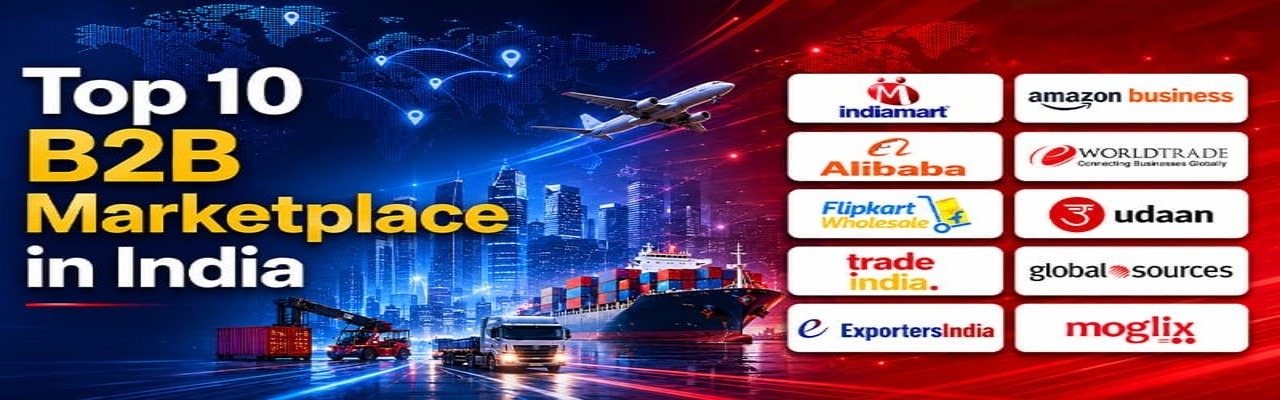
Do B2B marketplaces confuse you? Want to know how the top B2B marketplace in India can uplift your B2B business’s growth? For starters, online B2B marketplaces have revolutionized the B2B industry. Earlier, conventional B2B buying and selling required lots of time and energy. Plus, finding legitimate business inquiries used to be expensive, and there was no certainty if there would be any conversions. However, online B2B marketplaces have quickly changed the industry dynamic with their fast-acting methods and effective outcomes. There are countless benefits of online marketplaces, especially if you are in the e-commerce industry. No need to run before clients for conversion. Online marketplaces ensure that businesses will receive only verified buyer inquiries. Similarly, bulk buyers can interact with trusted suppliers after carefully evaluating their business’s authenticity. So, how is the top B2B marketplace in India connecting manufacturers, wholesalers, and MSMEs? B2B TradeMart, IndiaMart, Trade India, ExportersIndia, and others are leading marketplaces in India. These platforms offer many perks that make opting for online marketplaces a good idea. To know more about B2B marketplaces and their dynamics, keep reading the blog. Here, we have explained the top 10 B2B websites in India, the benefits and challenges of the top B2B marketplace in India, and the future opportunities they hold. Let’s start! What is a B2B Marketplace? A B2B marketplace is an online business-to-business platform where buyers and sellers connect and perform trade. In B2B marketplaces, companies exclusively buy or sell products and services of the B2B sector. In simple terms, B2B marketplaces are like Amazon or eBay, but for wholesale buying and selling. On such platforms, corporate trade is managed, especially for bulk purchasing and complex supply chain management. How B2B Marketplaces Work? Unlike regular B2C and D2C marketplaces, where individual buyers purchase a single product, a B2B marketplace is for bulk orders. Here, manufacturers, wholesalers, distributors, retailers, and suppliers connect to buy and sell in bulk. Offline or manual negotiations are ineffective in B2B marketing because these businesses require back-and-forth emails, spreadsheets, and digital tools to streamline trade. Top 10 B2B Marketplaces in India The following are the top 10 B2B marketplaces in India: B2B TradeMart B2B TradeMart is a trending B2B portal in India that connects MSMEs, large enterprises, wholesalers, and verified suppliers to streamline wholesale and corporate trade. It is a centralized hub for B2B buyers and sellers to scale their business with reduced marketing expenses and safe transactions. With B2B TradeMart, businesses can get several benefits, like: Secure Platform - B2B TradeMart prioritizes security by verifying business profiles and ensuring the authenticity of both buyers and suppliers. This ensures their platform is safe, as they have significantly reduced the risk of fraud or non-verified leads. Wider Business Reach - B2B TradeMart is a popular name as the top B2B portal in India because it allows businesses to display their business profile and product catalogs 24/7. This way, whether you belong to the manufacturing, wholesaling, or MSMEs business, you can expand your business’s reach to a wider audience. User-Friendly Interface - B2B TradeMart offers a user-friendly interface thanks to its AI-based recommendations and advanced filters. These filters help in creating a personalized layout for businesses. As a result, sellers can use the data-driven insights and analytics to optimize their pricing and business listings. Seamless Operation - B2B TradeMart has an integrated trade cycle that includes communication tools and an inquiry system, streamlining operations seamlessly. IndiaMART IndiaMART is one of the largest and most popular e-commerce marketplaces for trading goods and services online in India. The platform has dominated the market for decades, and the credit goes to its dedicated tools specifically designed for MSMEs. IndiaMART has connected over 10 million buyers and suppliers across 50+ industries. The platform is among the successful B2B sites in India due to the following reasons: Large Network - IndiaMART has an excellent track record of drawing businesses and verified leads. Small City Growth - The platform is unlocking entrepreneurial opportunities across India, especially in small Indian cities that serve as lifelines for regional businesses. Verified Platform - The platform is building trust among users in the B2B industry. They offer verified badges and Trust Seal certificates to ensure the authenticity of buyers and suppliers after thorough background checks. Detecting Buyer Requirements - The platform uses algorithms that detect buyers’ requirements and connect them with those suppliers who can provide them with the best results. TradeIndia TradeIndia is a well-established B2B marketplace that has a robust ecosystem of buyers and suppliers. Millions of MSMEs and large organizations have joined the platform to deal in 1 Lakh+ product categories. In addition, top B2B companies in India trust TradeIndia to manage their business networking, buyer leads, digital marketing, and website management. What’s more? TradeIndia is a leading name in wholesale marketplaces thanks to its expansive user base. With millions of registered businesses, the platform generates numerous business opportunities. The platform offers comprehensive solutions, including customized listings, online catalogs, secure transactions, and dedicated payment & account management systems. TradeIndia hosts and organizes trade events to offer both online and offline exposure to new and existing businesses. At these events, businesses showcase their products and services, both in person and virtually, and express their brand’s uniqueness in a competitive market. The platform fosters a secure, reliable environment with verified business listings and legitimate ratings. ExportersIndia ExportersIndia is known for its massive network of global buyers and suppliers. The platform ensures MSMEs gain global exposure by driving visibility and engaging businesses in mutually beneficial activities. Millions of verified buyers and suppliers promote a vast network. By joining ExportersIndia, businesses get instant recognition in the global marketplace. Get dedicated support for the business’s growth through inquiry tools, lead generation, and international trade navigation. Highlight your business authenticity indicators like certifications, product portfolios, awards, and other comprehensive profiles for competitive advantage. The SEO-friendly business model gives the business an organic exposure with better ranking in the top search engines. Amazon Business Amazon Business is a popular B2B marketplace in India that combines e-commerce convenience with technical expertise. Since the marketplace offers a familiar experience, specializing in procurement tools is not an issue for corporate buying and selling. The platform allows businesses to streamline operations. Tax & compliance solutions that enable businesses to list GST-enabled products, easily download invoices, and claim tax credits for bulk sales. The platform controls corporate purchasing, including spending limit management, purchase customization, expense adjustments, and approval workflows. Unlock bulk discounts and get better pricing on large orders or frequent buying. Amazon is a reliable name that ensures fast logistics through its doorstep delivery service. Alibaba India Alibaba India is one of the top 10 B2B portal in India that connects MSMEs with international buyers. The platform promotes cross-border trade. That’s why it is the best b2b portal for export business in India. Flipkart Wholesale To simplify bulk procurement, Flipkat Wholesale is a popular choice. The portal offers competitive prices and a diverse product catalog across several niches, including grocery, apparel, electronics, consumer goods, and more. Udaan Udaan is a revolutionary marketplace that empowers the MSMEs engaged in B2B buying and selling. The platform has eliminated supply chain intermediaries and offers highly competitive wholesale prices. JioMart Partner JioMart Partner offers bulk discounts to the neighborhood kiranas, hotels, and local small businesses. Other than that, digital procurement, door-to-door delivery, and the elimination of wholesalers help in streamlining business processes on this platform. Moglix Moglix offers a reliable business experience that is similar to Amazon’s. The digital fragmentation, industrial supply chain, and MSME-centric practices make it a suitable B2B portal in India. Comparison Table of Top B2B Marketplaces in India Below is the comparison table for the top B2B marketplaces in India: Platform Best For Industry Pricing App Available Export Support B2B TradeMart Manufacturers, suppliers, wholesalers Multi-industry  Free listing + paid promotional plans  Yes  Moderate export support  IndiaMART MSMEs, manufacturers, wholesalers Multi-industry Free basic listing / Paid premium plans Yes Limited international support TradeIndia Exporters and industrial suppliers  Industrial goods, textiles, machinery  Free + subscription plans  Yes  Strong export-import support  ExportersIndia Small exporters and MSMEs  Handicrafts, agriculture, and engineering  Free + premium membership  Yes  Dedicated export support  Amazon Business Corporate and bulk purchasing  Office supplies, FMCG, electronics  Free buyer account; seller fees apply  Yes  Moderate export capabilities  Alibaba India Global exporters and manufacturers  Multi-industry  Free registration; paid supplier packages  Yes  Excellent global export support  Flipkart Wholesale Retailers and resellers  Grocery, fashion, electronics  Free registration  Yes  No major export support  Udaan Kirana stores, retailers, distributors  FMCG, lifestyle, electronics  Free registration  Yes  Minimal export focus  JioMart Partner Grocery retailers and small shops  FMCG, grocery  Free registration  Yes  No export support  Moglix Industrial and B2B procurement  Manufacturing, tools, safety equipment  Custom enterprise pricing  Yes  Limited export support    How to Choose the Right B2B Marketplace? Trust, relevance, and scalability are the 3 core values that ensure a B2B marketplace's credibility. Choosing the top 10 B2B websites in India is based on your business goals, target audience, budget, and industry type. To select the best marketplace, top B2B companies do the following things: Identify their business needs Check the industry relevance Compare prices and membership plans Analyze buyer traffic and global reach Look for international trade and export opportunities How easy and manageable is the platform Evaluate the platform’s reviews and success stories Check if the platform is reliable For Manufacturers A platform that offers bulk lead generation, business expansion opportunities, and verified suppliers is ideal for manufacturers. TradeIndia, IndiaMART, B2B TradeMart, Alibaba India, etc., efficiently connect manufacturers with wholesalers, suppliers, and bulk buyers globally. For Retailers For retailers, an ideal platform must offer competitive pricing, quick & easy purchasing, fast delivery, inventory management, bulk buying, etc. For Exporters Exporters should focus on marketplaces that provide global visibility and support the export market. Access to global buyers and efficient export management facilities are perfect for exporters. For Small Businesses Small businesses need affordable top B2B companies in India that generate growth opportunities, along with a simple onboarding process to increase their online visibility. For Industrial Procurement Platforms that use the right tools, bulk procurement solutions, safety measures, and specialized technologies are ideal for industrial procurement. The top b2b lead generation companies in India support expansive product catalogs and business solutions. Benefits of Using B2B Marketplaces The following are the benefits of using B2B marketplaces: Faster Supplier Discovery The best B2B platforms make it easy for businesses to discover verified manufacturers, wholesalers, and suppliers on a single platform. Now, companies can easily compare suppliers, their product catalogs, pricing, reviews, and other information without requiring excessive manual effort, saving both time and money. Reduced Operational Costs By reducing marketing, procurement, and communication expenses, the top 10 B2B portal in India is helping businesses in reducing their operational costs. Additionally, profit margins are increasing through bulk purchasing, direct communication with suppliers, competitive pricing, and manageable operational costs. Scalable Procurement MSMEs, wholesalers, suppliers, and bulk buyers get the support they need from B2B marketplaces. The platforms allow them to access a wider supplier network and bulk inventory options. This allows businesses to scale their procurement without worrying about arranging a heavy investment to source seams and prepare infrastructure. Better Business Networking The top B2B lead generation companies in India trust B2B marketplaces for better business networking, as the platforms are ideal for connecting manufacturers, retailers, exporters, and distributors from various industries and regions. As a result, businesses build long-term partnerships and find new opportunities to expand their network via trade inquiries and direct interactions. Challenges of B2B Marketplaces The top B2B marketplace in India is best known for offering convenience and opportunities for business expansion. However, there are some challenges that even the top marketplace faces. Like any industry, even the best B2B platforms face setbacks. Since the industry is dynamic, challenges will surely occur. There are some limitations that every business must be aware of before commencing B2B buying and selling. The challenges of B2B marketplaces are: Fake Suppliers Unverified or fake suppliers are among the most pressing challenges that B2B companies in India face when seeking business expansion opportunities on B2B marketplaces. Sometimes sellers provide false or misleading information, product details, or certifications, or, worse, disappear after receiving payment. As a result, businesses face order delays, financial losses, and broken business relationships. This is why verifying the supplier’s authenticity is a must. Always look for proof of legitimacy, such as reviews, certifications, and company information, before finalizing transactions. Price Competition Since multiple suppliers offer the same product category on the same platform, competition is higher in B2B marketplaces. This often leads to price wars between suppliers and pressures them to reduce their profit margins to attract more buyers. Such strategies often become challenging for small businesses, as they struggle to stay competitive with large companies offering bulk discounts and competitive pricing, while small businesses are barely making anything. Quality Control Issues Dealing with unknown suppliers online can be tricky, as there is no certainty that they will maintain consistent product quality or that the product will be up to the mark. It is often the case that the product images and descriptions do not match the actual product delivered to customers. In fact, businesses may receive poor-quality, defective, or low-standard goods, which may disrupt operational efficiency and fail to satisfy customers. So, to eliminate quality issues, proper sample testing and the product’s quality evaluation are a must. Shipping Delays In B2B operations, delivering the products and services on time is important. However, delivery delays are quite common in the top B2B marketplace in India. Inventory storage issues, logistics challenges, customs clearance issues, and poor supply chain management are among the major reasons for shipping delays. The entire product schedule and operational costs are disrupted by delivery delays. This negatively impacts a business’s reputation due to issues of commitment. Future of B2B E-commerce in India The future of B2B ecommerce in India shows great potential and promising growth. With relentless digital transformation, internet dominance, adoption of online business models, and the ability to target the right market niches, the future looks promising for manufacturers, wholesalers, retailers, exporters, and suppliers. Conventional procurement methods are nearing their end as businesses seek faster, more efficient platforms, such as digital marketplaces. The future holds lots of benefits that could be due to the following reasons: Digital Marketplace Growth The future of B2B marketplaces is expected to grow significantly as B2B businesses will rely on online sourcing and bulk purchasing. Online marketplaces make procurement easier and more transparent by helping suppliers in India and abroad. Increase in MSMEs Micro, Small, and Medium Enterprises will continue to choose B2B marketplaces for e-commerce, as these platforms help expand their reach and reduce operational costs. With digital platforms, small companies can compete with big names in the industry, as the top B2B marketplace in India provides them access to a wider customer base and helps them connect with better suppliers. AI Integration and Automation AI, data analytics, and automation play an influential role in deciding the future of B2B e-commerce in India. Businesses will use powerful tools to forecast the scope of improvement for an efficient customer experience, including automated inventory management, AI-powered recommendations, chatbots, and demand forecasting. Cross-Border Trade Expansion Indian businesses are making every effort to enter the global market to increase their brand’s visibility internationally. The future of e-commerce in B2B marketplaces will increase opportunities to connect Indian businesses with international audiences. With cross-border trade opportunities, manufacturers and exporters will expand their businesses by connecting directly with international buyers. Digital Initiatives Supported by the Government The Government of India has launched many initiatives to encourage startups and MSMEs. Digital India and Startup India are among the schemes launched to encourage businesses to adopt e-commerce platforms. In addition, GST implementation is also benefiting businesses. The government initiatives are improving transparency, supporting e-commerce growth, and simplifying taxation for businesses across India. Conclusion In conclusion, as the top B2B marketplace in India, we can see that B2B platforms connect buyers and suppliers to ensure hassle-free trade. These platforms are efficient for bulk trade among wholesalers, manufacturers, retailers, suppliers, and bulk buyers. Conventional B2B trading methods had loopholes and were extremely exhausting. But online marketplaces are great for streamlining business processes. IndiaMART, ExportersIndia, Trade India, B2B TradeMart, Amazon Business, Flipkart Wholesale, and others are among the top B2B companies dominating the B2B e-commerce industry in the best ways possible. Choosing among them is not challenging. You just have to be clear about your requirements for the marketplace before deciding which one will be best for you. Whether you are a manufacturer, retailer, or exporter, the B2B ecosystem offers a range of options. Furthermore, the top B2B marketplaces in India offer benefits such as faster supplier discovery, reduced operating costs, scalable procurement, and improved business networking. These benefits will help expand your business. However, there are some challenges with online marketplaces that become hurdles for businesses. Shipping delays, price competition, fake suppliers, and quality control issues are among the most pressing problems that B2B marketplaces face. Moreover, the future of these marketplaces offers countless opportunities for businesses’ growth. So, every business should put its interests on these platforms and trust the process. The future will offer countless business opportunities that will take B2B buying and selling to the next level.

Top Trending Products 2026, B2B Marketplace Products

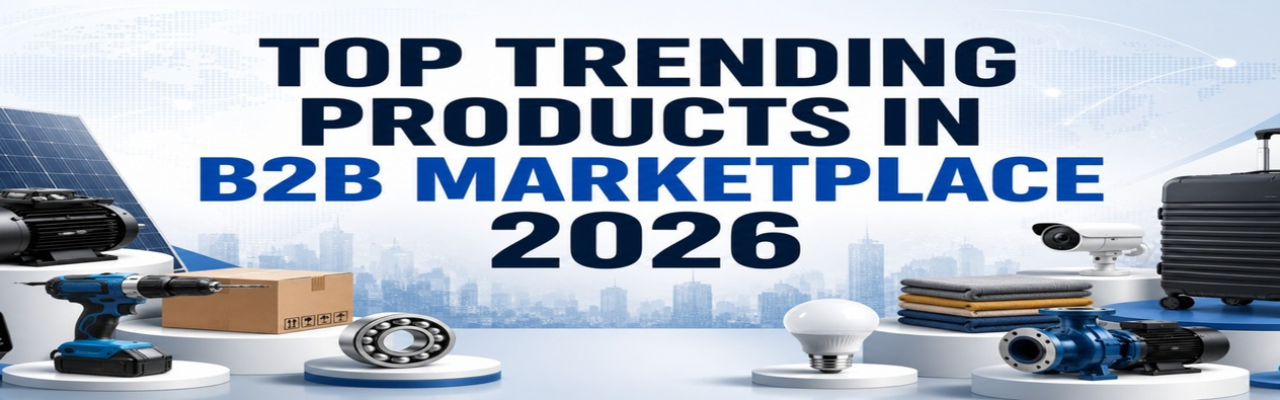
Top Trending Products In B2B Marketplace 2026

In 2026, Indian businesses are increasingly using B2B platforms to access new markets and connect with potential buyers. However, many businesses face one important question: What products should they sell on a B2B marketplace? With thousands of products online, identifying those with consistent demand and long-term growth potential can be challenging.  Succeeding in the B2B marketplace is not only about creating a seller account but also about choosing the right products. Selling top trending products in a B2B marketplace is important for several reasons.  It can help businesses generate recurring bulk orders, build long-term buyer relationships, and scale up their operations. On the other hand, selecting products with limited demand or intense competitive markets can make it difficult to achieve sustainable growth.  In this blog guide, we share the most trending products to sell on B2B marketplaces in 2026, why these product categories are in high demand, and practical tips to help businesses choose the high demand products and start selling successfully in the competitive B2B marketplace.   Why Choosing the Right Product Matters in a B2B Marketplace? Selecting the right product matters, especially in the B2B Marketplace for several reasons. Choosing products with strong and consistent market demand can help businesses attract bulk buyers, improve profitability, and establish a sustainable presence in the marketplace. Here are the key reasons why selecting the right product matters in a B2B marketplace: Higher profit margins: Trending products often experience strong demand, allowing businesses to sell in bulk, optimize pricing and achieve better profit margins.  Recurring bulk orders: Products that businesses regularly need, such as packaging materials, industrial supplies, and raw materials, generate repeat orders and create a steady revenue stream.  Competitive advantage: Selling products that align with current market trends helps businesses attract more buyers, stay ahead of competitors, and respond quickly to changing customer needs.  Easier business scalability: Selling profitable B2B products with stable demand allows businesses to increase production, expand into new markets, and diversify their product portfolios as they grow.  Top Trending Products to Sell in the B2B Marketplace in 2026  The demand for B2B products continues to evolve as industries adopt new technologies, prioritize sustainability, and expand into global markets. Here are the top trending products in India to sell in the B2B marketplace in 2026:  1. Agricultural Products   Agriculture continues to be one of the largest contributors to India’s economy and remains a key driver of exports. India is among the world’s leading producers and exporters of agricultural commodities, creating significant opportunities for manufacturers, traders, and exporters. So, naturally, there is a huge demand for agricultural products.  Moreover, there has been a significance for the agricultural sector from the Government of India through various schemes. Today India is one of the largest exporters of rice in the world.  Trending agricultural products include:  Rice  Wheat  Pulses  Spices Fresh fruits and vegetables Organic food products Why they are trending: Rising global demand for food and organic products.  Government support through agricultural export policies.  Strong demand from food processing companies and wholesale buyers.  High export potential in international markets.  2. Sustainable & Eco-Friendly Products Due to stricter regulatory frameworks and requirements, there is now greater demand for sustainable and eco-friendly products. Many businesses are increasingly investing in the production of sustainable and environmentally friendly products.  Biodegradable products and single-use items, such as disposable plates, glasses, spoons, and paper tissues, are in high demand.  There is also demand for solar products and items made with renewable energy sources. Smart wearables and fitness equipments are some of the top trending ecommerce products in India.  Trending eco-friendly products include: Recycled products made using recycled materials.  Compostable tableware. Bamboo products.  Eco-friendly office supplies.  Why they are trending: Increasing environmental awareness worldwide.  Government restrictions on plastic waste.  Growing adoption of sustainable procurement by businesses.  Strong export demand for green products.  3. Industrial Tools and Machinery India today produces and manufactures so many products. Manufacturing these products requires industry-standard tools and machinery. There is a need for CNC machines, welding tools, general equipment, hydraulic machines, and other such tools. Businesses can directly provide these industrial tools and machinery to other manufacturers and factory owners.  Trending products include: Power tools  CNC machines Welding equipment  Industrial pumps Air compressors Factory automation equipment  Why are they trending: Growth in manufacturing industries.  Increased investment in industrial automation equipment.  Government initiatives such as Make in India.  High-value bulk purchases by industrial buyers.  4. Packaging Materials  There is also a demand for packing materials from different businesses. Every manufacturing, retail, pharmaceutical, and e-Commerce business relies on quality packaging materials for storage, transportation, and branding.  As online commerce continues to grow, packaging products remain one of the most stable B2B categories.  Trending packaging materials include:  Corrugated boxes Plastic containers Stretch films Bubble wrap Product labels Sustainable packaging solutions Why they are trending: Rapid growth of e-commerce and logistics. Increasing demand for the FMCG and pharmaceutical industries. Shift toward recyclable and sustainable packaging. Recurring bulk orders from businesses. 5. Health & Safety Equipment Health and workplace safety have become a major priority across industries such as manufacturing, healthcare, construction, and oil & gas. There is a reason behind the increase in demand for health and safety equipment.  Today, it has become increasingly important for businesses to comply with safety regulations, leading to increased demand for protective equipment.  Trending products include:  PPE kits Safety gloves Industrial helmets Safety shoes  Fire safety equipment Medical supplies  Why they are trending: Mandatory workplace safety regulations. Growing healthcare and industrial sectors. Increased awareness of employee safety. Continuous replacement and repeat purchases. 6. MSME-Centered Products  India’s Micro, Small, and Medium Enterprises (MSMEs) contribute significantly to the manufacturing sector and exports. Many products produced by MSME industries enjoy steady demand from wholesalers, retailers, and industrial buyers.  Trending products include:  Stationery products Furniture Fasteners Engineering components Plastic goods Electrical fittings  Why they are trending: Strong domestic manufacturing ecosystem.  Government support for MSMEs. Affordable production costs.  Growing demand from infrastructure and industrial sectors.  7. Technology and Electronic Components Technological advancement has led to demand for so many different products and components. Digital transformation, electric vehicles, automation, and consumer electronics continue to fuel demand for electronic components worldwide. So businesses involved in electronic manufacturing and assembly require reliable suppliers for these products. Trending products include: Semiconductors  PCB boards Sensors LED components Electrical connectors  Batteries  EV components  Why they are trending: Rapid adoption of smart technologies. Growth of electric vehicle manufacturing.  Expansion of consumer electronics.  Increasing industrial automation.  8. Textiles and Indian Handicrafts  India’s textile and handicraft industries remain among the country's largest export sectors. High-quality fabrics, home furnishings, and handcrafted products continue to attract buyers from international markets due to their craftsmanship, affordability, and sustainability.  Trending products include: Cotton fabrics Home textiles  Carpets and rugs Silk products Leather goods  Wooden handicrafts Handloom products Why they are trending: Strong international demand for Indian textiles  Growing demand for handmade and sustainable products.  Competitive pricing in global markets.  Significant opportunities for exports across Europe, North America, and the Middle-East.  Step-by-Step Guide to Selling Products in a B2B Marketplace Choosing the right products is only the first step toward building a successful B2B business. To attract buyers and generate consistent sales, you need the right business strategy, legal compliance, and optimized product listing.  Here is the step-by-step guide: The first step is to choose the right product category among the trending products.  After this, research the market demand for the product which you are planning to sell.  If you have not already, then register your business for selling the product. A legally registered business enhances credibility and is often required for selling on B2B marketplaces.  Obtain the necessary registration and licenses, such as GST registration, FSSAI certification, MSME registration, ISO certification, and any other approvals required for your industry.  You must prepare a well-organized product catalogue, including high-quality images, detailed descriptions, technical specifications, pricing information and minimum order quantities (MOQs).  You need to join a trusted B2B marketplace platform. B2B Trademart is one such platform which links skilled suppliers, manufacturers, and service providers with domestic and international consumers of different products.  Conclusion In 2026, you can choose from several trending B2B products. There is no single “best” product to sell in a B2B marketplace . The right choice depends on your investment capacity, industry expertise, target customers, and long-term business goals.  Start with one or two high-demand products, understand your target market, optimize your product listings, and gradually expand your catalog as your business grows. The opportunity to sell top trending products through the B2B marketplace has never been greater. We at the B2B Trademart can be your partner and help you successfully sell your products online.  

What is B2B Trade, and how is it different from B2C and C2C?

What is B2B Trade, and how is it different from B2C and C2C?

What is B2B Trade, and how is it different from B2C and C2C? The market cap of B2B trade is far higher than that of B2C. According to a recent report by Mordor Intelligence, business-to-business (B2B) trade is expected to exceed $60 trillion by 2031. Several reasons contribute to this massive growth: B2B transactions usually involve bulk purchases and higher order values, which make them larger than B2C transactions.  Revenue streams are more stable as B2B deals are generally based on long-term relationships. Today, online B2B marketplaces also play an important role in helping businesses connect, generate leads, and expand their reach. In fact, these platforms have made B2B trade more accessible for small and medium-sized businesses.  So whether you are a manufacturer, supplier, wholesaler, or entrepreneur, it is important for you to understand B2B and how it works. This blog explains different business models, including B2B, B2C, and C2C, and how they differ.  What is B2B Trade?  B2B stands for "business to business”. As the name itself suggests, Business-to-Business (B2B) dealings are between two businesses.  Unlike the conventional business model, where the target audience is direct consumers, in B2B trade, business owners are the primary targets.  Generally, B2B deals can involve raw materials, finished goods, machinery, software, consulting services, or any other business requirement. In B2B, a company is selling products or services to another company.  Here are two examples of B2B transactions for products and services:  B2B Product Example: A manufacturer supplying equipment and raw materials to factories.  B2B Service Example: A digital marketing company offering SEO services to a luxury apparel brand.  What is B2C Trade? B2C (business-to-consumer) refers to businesses selling products and services directly to individual consumers. This is the type of transaction most people experience every day.  The main objective in B2C is to satisfy consumer needs and preferences. Retailers have direct contact with consumers. A common cycle of the economy is- Manufacturers→ Wholesalers→ Retailers→ Consumers Consumers come at the last stage of finished goods and personalised services.  Unlike B2B buyers, consumers make purchasing decisions faster and are influenced by several other factors, such as advertising, reviews, convenience, and most importantly, emotions.  What is the C2C Trade? Though not as popular as B2B and B2C, C2C is another form of profit-generating business model. Here, the transfer of goods and services is between two consumers.  In simple words, the C2C trade involves transactions between individual consumers, often facilitated by online marketplaces.  Today, anyone can become a seller using an online marketplace. Common examples of C2C trade include:  Selling used furniture Trading collectible Reselling electronics or a used vehicle  Real Difference between B2B vs B2C vs C2C B2B, B2C, and C2C all sound similar, but they are different business models. The key differences between these models are as follows: Feature B2B B2C C2C Full Form Business to Business Business to Customer Customer to Customer Buyer Business Individual customer Individual customer Seller Business Business Customer Product Purpose  Business operations Mostly for personal use Personal use Order Value Large  Generally small  Small  Sales cycle Long Short Short Pricing Negotiated Fixed Fixed Advantages of B2B Over Other Trade Models The business-to-business model offers more advantages as compared to other trade models. Here are the key benefits: Higher Revenue Potential Strong Customer Retention Predictable Revenue Reduced Operational Costs 1. Higher Revenue Potential A single deal in B to B trade can bring revenue worth millions of rupees. Businesses take time before engaging in BtoB trade and placing orders.  But when they do, generally bulk orders are placed. And these orders bring higher revenues.  So, unlike the B2C trade, the number of orders may be lower, but the overall revenue is higher.  For example, manufacturers often secure contracts that cover months or years of supply for different businesses.  2. Strong Customer Retention  According to the McKinsey B2B survey, suppliers and manufacturers are far more cordial in B2B trade.  This is possible because many businesses prefer maintaining long-term supplier relationships once trust has been established.  3. Predictable Revenue Successful business owners do not change suppliers or manufacturers too often.  Instead, long-term contracts are established to foster better partnerships. This ultimately helps in getting a predictable revenue stream.  Unlike individual loyalty in B2C or C2C, which can shift at any time when better pricing options arise. Business to business deals last longer.  4. Reduced Operational Costs The operational costs of running a business are not much higher. There is no need to have a large store or shop to provide goods, as the target audience is not individual consumers.  This essentially reduces the per-unit cost of packaging, shipping, and fulfilment.  How Does B2B Trade Work? Step-by-Step Process The buying process in the B2B trade is quite complex compared to B2C.  As you already know, B2B involves two businesses dealing mostly in long-term partnerships, so the process has multiple steps, which are: Step 1: Identifying a Business Need  The process begins by identifying a challenge or opportunity for a business. For example, if you are a mobile phone manufacturer, you may need chips.  You may look for a supplier who can supply these chips for your business.  Step 2: Finding the Supplier  Businesses rarely buy from suppliers they find for the first time. Instead, they evaluate multiple vendors. Before you finalise a supplier for your business, you need to consider these factors:  Industry experience Product quality  Pricing  Reputation Delivery capabilities   Step 3: Comparing Solutions This is also another important part of the B to B trade deal; it is vital to compare different solutions. The common questions can include:  Which solution provides the best value? Which supplier offers reliable support? Can the product scale with business growth? What are the long-term costs? Step 4: Negotiation and Contract Discussion After comparing different options, the next step is to negotiate and discuss the contracts. Generally, in a B to B deal, prices are not fixed.  As businesses place bulk orders, there is a possibility to negotiate pricing and come to better terms. Generally, at this step, the business: Try to reach better pricing Sign long-terms contracts  Step 5: Purchase and Implementation The last step involves implementation. If you have purchased the products, you need to integrate them into the inventory.  However, if you have purchased services or software, the implementation process may include training sessions, onboarding, and process integration.  Types of B2B Trade All B2B are not the same. And the business to business models are also divided into different categories. These are different types of B2B trade:  Manufacturer to Manufacturer Wholesaler to Retailer Service-Based B2B 1. Manufacturer to Manufacturer When one manufacturer supplies materials or components to another manufacturer. This is the most common business model that comes to mind when we talk about B2B.  For example, when a car manufacturer purchases tyres, batteries, and steel components from a specialised supplier.  These partnerships are quite important, and the final product would not exist without them.  2. Wholesaler to Retailer Wholesalers generally buy or manufacture the products in bulk and then sell them to the retailers. These retailers then sell these products to the consumers, which becomes B2C.  Generally, retailers have direct access to consumers, making it easy for them to reach out and offer products at better prices.  3. Service-Based B2B As the name itself suggests, this business model involves service providers offering their services to different businesses.  There are various businesses that specialise in providing customised services to meet the needs of other businesses.  Examples of service-based B2B include SaaS, legal consultation, and corporate law.  Example of B2B Trade Marketplace A B2B marketplace is an online business-to-business platform that connects manufacturers, suppliers, wholesalers, and buyers in one place. These platforms make it easier for businesses to find products, compare suppliers, send inquiries, and close deals without visiting multiple vendors.  Some of the examples of B to B trade marketplaces are as follows: IndiaMart B2B Trademart Trade India Exporters India Just Dial India Mart IndiaMart is a well-known online B2B marketplace in India. It caters to many different industries, including machinery, electronics, mechanics, packaging, healthcare, and construction.  This platform helps businesses generate leads from buyers. Not only that, but IndiaMart also allows suppliers to respond with quotations and details.  For instance, suppose you are a restaurant owner and want to purchase commercial kitchen equipment. You can easily post a request for kitchen equipment on IndiaMart and receive quotations from several suppliers in a short time. Based on the available options, you can compare and negotiate better prices.  B2B Trademart B2B Trademart is also one of the emerging online marketplaces in India that helps manufacturers, exporters, suppliers, and traders to promote their products and connect with buyers. The platform allows businesses to list their products, create company profiles, and generate leads across a wide range of industries. For small and medium-sized enterprises (SMEs), B2B Trademart is ideal, as it helps them gain online visibility and grow their customer base. B2B Trademart’s core strength is its wide range of product categories, which are: Industrial Machinery  Industrial Suppliers Ayurvedic and Herbal Products Home and Furniture Suppliers Textile, Yarns, and Fabrics Food Products and Beverages   Trade India Trade India is one of India’s oldest B2B marketplaces. Founded in 1996, Trade India connects buyers and sellers across various industries. Different suppliers can create a business profile on this platform to showcase their products and services to potential buyers.  Even buyers can search for products by category, compare different products from suppliers, and request a quotation directly through the platform.  For example, a textile manufacturer in Surat looking for industrial dye can search on TradeIndia and find multiple suppliers from Gujarat, Maharashtra, Madhya Pradesh, and other states. Similarly, a buyer can compare prices, product specifications, and supplier ratings before making a final decision.  Exporters India For domestic and international businesses and suppliers, Export India works as a common marketplace. Export India allows businesses to promote their products in global markets and export to international markets.  On this platform, businesses can easily create a detailed company profile, list products, and receive queries from buyers. Export India ultimately allows businesses to: Build relationships through an international buyer-seller network Promote their products for exporters Get quality trade leads and inquiries  Just Dial  Just Dial primarily works as a business directory platform. Buyers can use this platform to discover suppliers, service providers, manufacturers, and wholesalers for a specific location. It essentially plays a role in B2B commerce and works as a local search platform.  Why Choose the B2B Trademart for B2B Trade? Here are some of the reasons why you should choose the B2B Trademart for B to B trade: B2B Trademart gives you a platform to showcase your products and services to a broader audience.  On our platform, you can generate better leads for your business. In fact, you can connect with buyers who are actively looking for your products and services, thereby increasing your chances of generating leads.  You get a stronger brand presence in the online marketplace. Your business’s online profile improves your business’s visibility and establishes credibility in competitive markets.  Compared to traditional advertising and offline marketing, B2B Trademart offers you a more affordable way to promote your business.  Other than marketing benefits, B2B Trademart gives you long-term support for business growth.  Conclusion To sum up the blog, B2B trade is much more than businesses selling products to other businesses. And a lot of people get confused between B2B, B2C, and C2C. But they are fundamentally different.  While B2B involves business-to-business transactions, B2C means business to customer dealinng which are also known as retail, and C2C has customer to customer transactions.  Ultimately, all these business models work differently. Businesses need specialised strategies for B2B growth and for identifying the right sales models.  If you are looking to grow your business, generate high-quality leads, and connect with trusted buyers and suppliers across industries, we at B2B Trademart can assist you in taking the next step.