Trade Insights

Top Most Exported Products from India in Global Market

B2B Admin
12 min read
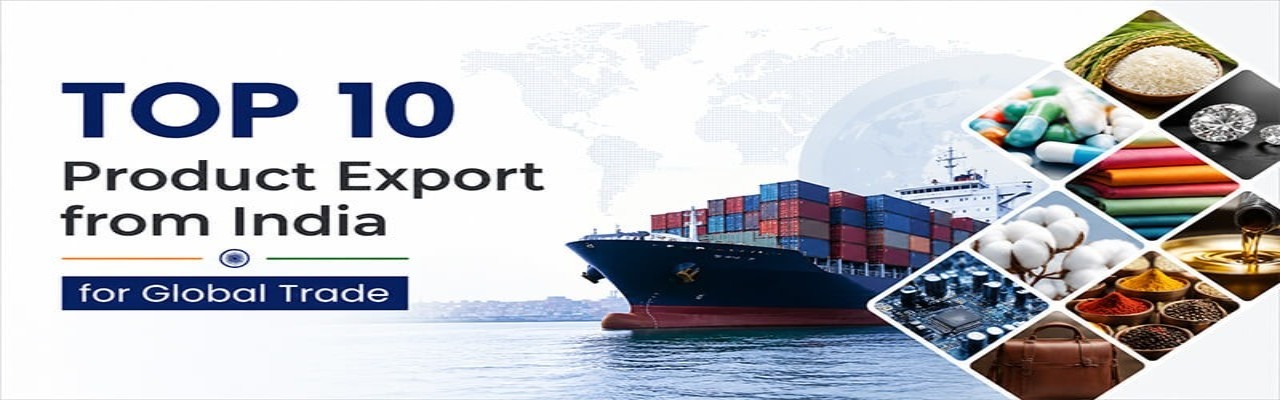
Top 10 Product Export from India
12 min read Updated 30 Jul 2026
Share:

Thinking about starting your own export business in India? Before choosing any random category, first you must learn what the top 10 product export from India are. India is one of the fastest-growing economies in the world. Export plays a significant role in making this possible. India exports a wide range of products to the global market.

Indian exports have excelled in the international export market across categories, including agriculture, technology, petroleum, textiles, and engineering goods. Saying that exports play a pivotal role in India's international trade would not be wrong. India’s exports are known worldwide for their top-notch quality, strong overseas demand, competitive pricing, and more.

But how to find out which product category among the top 10 product export in India will be perfect for your export business? To help you figure this out, we have prepared a list of India's top export products in this blog. Here, you will learn what the top 10 product export in India are, which products India exports the most, and how you can start your export business. Let’s read on to find out which product will be perfect for your export business and how you can start your startup. Read more!

Top 5 Most Exported Products from India

Before discussing the top 10 product export from India, first you must understand the top 5 categories. We have filtered the top 5 export categories to help you understand better why these products are in high demand. The following are the top 5 categories for export products from India list:

Petroleum Products

Petroleum is one of the top 5 export products of India. Talking about the largest exporters of refined petroleum products is incomplete without mentioning India. Our country widely exports petrol, diesel, aviation fuel, lubricants, and other petroleum products across Asia, Africa, and Europe. Petroleum products are among the highest export products from India, and India’s major earnings are significantly derived from this sector, thanks to India’s strong refining capacity and increasing global demand for petroleum and petroleum products. Gujarat’s Jamnagar port plays a crucial role in strengthening India's petroleum industry.

Pharmaceuticals

India is called the “Pharmacy of the world”. The reason behind this is the production of high-quality medicines on a large scale, which is also at affordable prices. The list of products export from India shows that the country exports generic medicines, antibiotics, vaccines, and medical formulations to 200+ countries worldwide. It is globally acclaimed that India’s pharmaceutical companies are trusted worldwide for exporting cost-effective medicines and healthcare products. In fact, during global health emergencies, India has made a significant contribution to the world by becoming a major vaccine exporter.

Rice

Rice is one of the top export products from India in the agricultural sector. Rice varieties, including Basmati and non-Basmati, are widely exported globally. India’s rice holds high value in both domestic and global markets. Its rich taste, aroma, and finest-quality grains are appreciated worldwide. Africa, the Middle East, and other Asian countries are the major buyers of Indian rice. India is among the top rice exporters in the world. Strong agricultural production and favorable climatic conditions support Indian farmers and traders in producing rice, and India continues to be the world’s top rice exporter.

Gems and Jewellery

India is one of the top names when it comes to exporting gems and jewellery globally. Indian jewellers are engaged in the cutting, polishing, and exporting of diamonds, precious stones, and gold jewelleries. Surat and Mumbai are the hubs of the gem and jewellery industries. You will find skilled craftsmanship and modern technology. In addition, the competitive pricing of Indian jewellery makes it highly demanded globally. This is why the gems and jewellery sector generates a large sum of foreign earnings. As a result, this growth generates employment opportunities for many artisans and workers across India.

Engineering Goods

Electrical machinery, industrial machinery, automobiles, industrial equipment, iron & steel products, and the rest come under the engineering goods category. In addition, engineering goods are among India's top 5 export products to the USA, Africa, and the Middle East. Advanced manufacturing technologies and industrial products drive the rapid growth of the engineering goods sector. Moreover, the credit for the strength of India’s industrial development goes to the engineering exports, as these products have a significant contribution to India’s economy.

Top 10 Product Export from India

The following are the top 10 product export from India:

Textile Products

India is among the top countries in the world that exports textiles such as cotton, silk, wool, home textiles, garments, etcetera. The textile industry is widely popular for generating employment and contributing a large share to India’s export economy. India’s craftsmanship, high-quality products, and affordable production are some of the reasons why this sector continues to grow in the future.

Tea & Coffee

India is known for many things, and dominating export markets with high-quality products helps it maintain that reputation. From technology and pharmacy to spices and textiles, you will be surprised to see how people embrace the quality of India’s export products. Tea & coffee remain among the top 10 products exported from India. Our country is renowned for exporting premium varieties of tea and coffee. Assam tea, Darjeeling tea, and Arabica coffee never disappoint. Many European countries, the United States of America, and the Middle East admire the rich taste, aroma, and quality of India’s tea & coffee, which are always in high demand.

Spices

Want to know which products India exports most? It’s the spices. India is called the “Land of Spices”. Products like turmeric, pepper, cumin, cardamom, and chili are widely exported worldwide by India. The food industry and global cuisines prefer to use Indian spices for their rich aroma, divine taste, and medicinal qualities.

Chemicals

Chemicals such as fertilizers, industrial chemicals, organic chemicals, and dyes are exported in large quantities from India to many countries. This sector makes a major contribution to India’s international trade as chemical sector is somewhere supporting the pharmaceutical, manufacturing, and agriculture setror in India.

Electronics

Electronics are one of India’s top 10 export products. Smartphones, computers, telecom equipment, consumer electronics, computer hardware, etc., are exported from India to many countries worldwide. Increasing manufacturing investments and government initiatives are helping India become an emerging name in the global electronics export hub.

Petroleum Products

India earns the most in export markets by exporting refined petroleum products such as crude oil, diesel, petrol, and aviation fuel. India imports crude oil to its large oil refineries and exports finished fuels to many Asian, African, and European countries.

Pharmaceuticals

India is a prime exporter of pharmaceutical products, such as medical drugs, generic medicines, medical supplies, and vaccines, to 200+ countries worldwide. India makes a significant contribution to supplying healthcare products, particularly of exceptional quality.

Rice

India’s Basmati rice is among the world’s top exported rice categories in the world, with India exporting large quantities throughout the world. The rich aroma, taste, and quality of Indian rice are widely popular. These quality indicators are highly acknowledged by countries in Asia, Africa, and the Middle East.

Gems and Jewellery

Silver, gold, diamonds, and precious stones are widely exported from India. The advanced polishing techniques, skilled artisans, and competitive pricing of Indian gems and jewelry make them highly popular in international markets.

Engineering Goods

Automobiles, machinery, iron & steel products, and industrial equipment are some engineering goods that India exports. This sector generates export revenue and boosts industrial growth in India, enhancing its manufacturing capabilities and export contributions.

Which Products India Exports Most?

India is amongst the top exporter country in the world. Electronics, agriculture, pharmaceuticals, refined petroleum products, and the rest are among the top 10 product export from India. To understand why India’s products are always in high demand in the global markets, you must understand which products India exports most. Some of the top export products from India are listed below:

Petroleum Products

Petroleum products, especially refined petroleum products like petrol, diesel, and other refined fuels, are always in demand in global export markets.

Agricultural Products

India exports spices, tea, rice, marine products, and other agricultural products. Most of the top 10 product export from India are from the agriculture sector only.

Pharmaceuticals & Drugs

Pharmaceuticals & drugs are the top 5 export products of India. Active pharmaceutical ingredients, medical supplies, vaccines, generic medicines, medical formulations, and packaged medicaments are exported from India to many countries worldwide.

Highest Export Products from India in 2026

The following categories make it to the highest export products from India list for 2026:

  1. Petroleum Products
  2. Pharmaceuticals
  3. Agricultural & Processed Foods
  4. Consumer Electronics
  5. Organic & Inorganic Chemicals
  6. Engineering Goods
  7. Gems & Jewellery

Why India is Growing in Export Business?

India has observed a recorded growth in the export sector. Export has become a billion-dollar industry in India. E-commerce, government manufacturing incentive schemes, supply chain & logistics, and the IT sector’s efficiency are playing a vital role in driving export growth and making exports a success for India’s economy. The reasons behind India’s growth in the export business are:

  • E-Commerce businesses
  • Digital Adoption by every business
  • Manufacturing Incentives & Policy Shifts
  • New Market Penetration
  • Trade Agreements between countries

How to Start Export Business in India?

Starting an export business in India is not too challenging. You just need to follow a few basic but really important steps to set up your own export business in India. Make sure that you own the necessary documents to make it happen. Permanent Account Number, GST Registration, 10-Digit IEC (Importer-Exporter Code) obtained from DGFT (Directorate General of Foreign Trade), and some other documents are a must. Once you get these documents, you have to find reliable international buyers. Plus, you must look for technologies and methods that can help you navigate your country's shipping and customs processes. The following are some steps on how to start an export business in India:

Step 1: Start your Business and Register it Legally

The most important step before you commence an export business is to formally start your business. Sole proprietorship, partnership, LLP, and a PVT. LTD. are some kinds of company structures in the business world. Here’s what you need to do next:

  • Register for a Permanent Account Number from the Income Tax Department.
  • Open a current account to dedicately use exclusively for your foreign exchange transactions.
  • Register for GST. You can either register for GST and pay the tax, then later claim input tax credit/refund, or you can skip GST by opting for a LUT, i.e., Letter of Undertaking for export.
  • Generate an Importer-Exporter Code, as it is the primary license for international trade.

Step 2: Get Membership & Clearance

  • Get the Registration cum Membership Certificate based on your product. Make sure to register with the relevant authority to manage exports.
  • Make sure to get a product-specific license if you are exploring chemicals, textiles, petroleum products, agricultural products, or anything else, because complying with the quality standards of international trade is necessary.

Step 3: Choose Products & Target Markets

  • Select any product that you want to export internationally. Textiles, spices, petroleum, rice, pharmaceuticals, engineering goods, and the rest are among the top 10 product export from India.
  • Carefully research countries that demand these products in good amount, have low tariffs, and offer excellent trade opportunities.

Step 4: Find Buyers & Finalize Deal with Them

  • Use B2B platforms, like b2btrademart.com , export promotion councils, programs like Amazon Global Selling, and trade fairs to find international buyers.
  • Once you finalize an export deal with international clients, use secure payment modes or half/full advance payments.

Step 5: Manage Shipping and Logistics

  • Hire a CHA, i.e., a Custom House Agent, who will help you with customs clearance and handle the necessary export documentation on your behalf.
  • Prepare the necessary paperwork to manage shipping and logistics. Commercial Invoice, Certificate of Origin, Shipping Bill, and Bill of Lading are really important.

Frequently Asked Questions

The following are some frequently asked questions on top 10 product export from India:

What are India’s top export products?

The top 10 products export from India are:

  1. Petroleum Products - Refined fuels like petrol and diesel, which are exported internationally.
  2. Pharmaceuticals - Worldwide export of pharmaceutical drugs, medicines, medical supplies, vaccines, and generic drugs.
  3. Rice - Basmati and Non-Basmati variants of Indian rice are exported across the world.
  4. Engineering Goods - India exports engineering goods such as automobile parts, iron & steel products, and industrial machinery.
  5. Chemicals - Fertilizers, organic chemicals, specialty chemicals, and so on are also exported globally.
  6. Tea & Coffee - Tea and coffee are some world-renowned Indian beverages popular for their rich aroma, top quality, and unmatched flavours.
  7. Spices - Indian spices like turmeric, pepper, cardamom, chili, and the rest are always in high demand due to their fresh aroma, rich flavours, and medicinal properties.
  8. Electronics - Consumer electronics, devices, mobile phones, electronic components, etc., are widely exported from India.
  9. Textiles - Indian fabrics, apparel, garments, and textile products hold a huge demand in international markets.
  10. Gems & Jewellery - India is a top exporter of precious stones like diamonds, silver, and gold jewelleries.

Which product is most exported from India?

According to the list of products export from India, refined petroleum products, like petrol, diesel, aviation fuel, and the rest, are widely exported to many countries. The major share of Indian export revenue is driven by refined petroleum products.

What is India’s biggest export industry?

Petroleum and refined petroleum products are India’s largest export industry, contributing a major share to India’s economy and global trade.

Which export business is most profitable in India?

Pharmaceuticals, engineering goods, medical equipment, petroleum products, textiles, and agricultural products are among the most profitable categories for export in India.


 

Tags: storage shelf supplier india storage shelves india shelving unit india metal storage shelves india wooden storage shelf india cheap storage shelves india warehouse shelving india office storage shelf india
B2B

Admin

Trade insights, sourcing guidance, and market trends for buyers and sellers across India's B2B economy.

Related Articles

paper packaging

Understanding Paper Packaging and Its Types

Are you concerned about the environment and want to switch to a sustainable packaging option? Paper packaging has dominated the industry thanks to its durability, sustainability, and affordability. Most people don’t bother checking the materials they use for packaging, thinking they're all the same. But they are wrong to think this way. Packaging material plays a pivotal role in securing what’s inside the package. Neglecting the packaging material can be an expensive mistake. An ideal packaging material should be sturdy, easy to handle, cost-effective, and environmentally sustainable. Packaging paper has it all. This is the reason why almost every industry has opted for paper over conventional packaging materials. Paper is a good packaging option because it offers several benefits. It is ideal in many ways, such as being presentable, maintaining the product’s quality, keeping the product secure, and being suitable for transportation. This is why businesses are opting for packaging paper. Following that, there are many types of packaging papers that industries use. The blog is about paper packaging and its types. Read more to understand what the material is and why people are using it or switching to the paper alternative. Let’s find out! What is Paper Packaging? Packaging paper is specially designed to wrap products and protect them from external damage. Typically, products are packed to ensure secure storage, handling, and transportation. Paper packing is used to securely pack food, fragile items, consumer goods, industrial goods, stationery & gifts, textiles, electronics, and other items. Paper packing material is different and easier to handle than plastic, metal, glass, and other conventional packaging materials. Indeed, plastic is a good packaging alternative, but it is very harmful to the environment. Compared to that, paper is safe, cheap, manageable, and biodegradable. Additionally, the paper packaging industry is growing rapidly because paper is an affordable alternative. Plus, it is very lightweight. So, handling packaging paper is easy. Moreover, packaging paper is made from a sustainable, recyclable material, and you may use it more than once. For example, you have received a paper bag with your purchase of an apparel. Then you have used the same paper bag to carry something you brought from somewhere else. This is how you are reusing the same paper bag more than once. The paper packaging industry uses a variety of options. Kraft, corrugated, coated, greaseproof, and the rest are common packaging types used by industries for packing food, consumer goods, gifts, and more. Who says packaging paper cannot look fancy? It is just a misconception that all packaging paper materials must be dull and ordinary-looking. There are some options that look absolutely aesthetic. That’s why many luxury brands use them to pack their products. If you have ever purchased an expensive piece of apparel from a luxury store, you must have received it in a chic carry bag. The brand’s name and logo are clearly visible, and the color of the carry bag feels quite luxurious. That’s why packaging matters. Why is Paper Commonly Used for Packaging? The packaging industry has switched to paper packaging to secure and wrap products. But do you wonder why they chose to switch to the paper alternative? There are several reasons why paper is an efficient packaging material. Many manufacturers and individuals rely on packaging paper. This is why paper is commonly used for packaging. Here’s what you should know: Paper Packaging is an Eco-Friendly and Sustainable Alternative Packaging paper has no negative impact on nature. Since paper is biodegradable and recyclable, it is a sustainable choice for the environment. By opting for paper as a packaging material, industries are making an effort to support nature in sustaining the Earth. Paper is a Lightweight Material and Ensures Durability The paper used for packaging food and other goods is lightweight and easy to transport. In addition, packaging paper is durable. So, it will not be damaged easily. Printing and Branding are Easy on Papers Printing a brand name on the packaging is a clever marketing tactic. This is why many companies use paper bags and packaging material and print their brand name, labels, and other information. This increases brand awareness, and the company logo is highlighted easily. What are the Types of Paper Packaging? The packaging industry offers a wide range of packaging materials. But paper is an excellent choice because it is affordable, accessible, manageable, and sustainable. However, packaging paper comes in many different types. Some of the types of packaging paper that industries use are: Corrugated Paper Corrugated paper is a multi-layer packaging material commonly used for shopping boxes. This type of packaging provides additional cushioning for the products, enhancing strength and support. Corrugated paper is perfect for packing fragile goods. Features: Multi-layered design Easy to carry Sturdy material Shock absorbent Gives additional strength to the product Recyclable Suitable for printing on the surface Commonly Used For: Apparel and Textile Electronic Appliances Food & Beverages Retail & E-commerce Packaging Kraft Paper Kraft paper is among the most durable and strongest packaging papers. It is made from wood extracts, mainly pulp, and is a sustainable choice for the environment. Kraft paper is completely recyclable and perfect for packaging heavy or large products. In fact, industries use kraft paper for bulk packaging. Features: Recyclable Durable Strong Commonly Used For: Construction Supplies Food & Beverages Agricultural Products Textile Retail & E-commerce Packaging Industrial & Manufacturing Products Recycled Paper Recycled paper is one of the sustainable packaging materials. Recovered fibers are used to make them. Although recycled paper is not as sturdy as kraft, it is a better and more sustainable option for the environment. This material does not require a heavy investment. It can be used to wrap sheets and recycled cartons at a surprisingly lower cost. Features: Biodegradable Environmentally-Friendly Cost-Effective Great for Printing Durable Commonly Used For: Tissue-Based Products Packaging Eco-Friendly Products Paper Bags Newspaper Packaging Printing Coated Paper Coated paper is a packaging material commonly used by high-end retail stores and luxury brands. These packages usually come in glossy or matte finishes. The surface is used for printing logos and designs. Overall, coated paper packaging gives the packaging an classy look and feels very authentic. Features: Smooth surface Durable and sturdy quality Comes in glossy or matte options Colorful packaging looks vibrant and aesthetically pleasing Commonly Used For: Retail Packaging Luxury Store Carry Bags Gift Bags and Boxes Invitation Covers Frequently Asked Questions The following are the frequently asked questions on paper packaging: What is a paper packaging? Packaging paper is a type of packaging option typically used to wrap products to ensure their safety during transportation. Cardboard, paper bags, paper boards, kraft paper, corrugated paper, recyclable paper, etc., are some types of packaging materials used by packaging companies. What are the types of paper packaging? Paper packaging comes in many different types. The following are some of the types of packaging paper commonly used by businesses: Corrugated Paper Coated Paper Parchment Paper Greaseproof Paper Paper Bags Cardboard Kraft Paper Recyclable Paper Cardboard Paperboard Boxboard  

transport and logistics Services

What do the Transportation and Logistics Services Mean?

Running an e-commerce business isn’t a piece of cake. Managing transport and logistics services efficiently is essential to running an online selling business smoothly. Delivering products to customers on time is essential for both customer satisfaction and the company’s reputation. It doesn’t matter how good your product’s quality is, if your logistics and transportation services are not up to the mark, the customers will lose interest in shopping from your company. Therefore, to ensure your logistics are up to the mark and meet expectations, you must focus on the types of logistics transportation. Logistics isn’t limited to a product’s shipping. It is more diverse than that. Managing, storing, and transporting the goods are the 3 steps in transportation and logistics services. Furthermore, tracking the inventory, managing shipping, and using the right technology to benefit your supply chain is a must. Nowadays, businesses use GPS tracking and optimization tools in logistics management. Want to know how transport and logistics services work? The blog can help! Read the blog to learn about transportation, logistics services, and the procedure for managing your supply chain seamlessly. Let’s dig deeper! What are Transport and Logistics Services? Transport and logistics services play a vital role in supply chain management. The service works as the support system for a supply chain, and the transportation of goods from one place to another, along with their management, depends on transport and logistics services . The service is essential for managing the flow of goods from their point of origin to the product’s delivery destination. Logistics transportation services are necessary for managing and coordinating the supply of goods across different modes of transportation. Freight is typically transported from the point of origin to the shipping address via different modes of transportation. Trucks, airplanes, trains, and ships are commonly used to move goods and cargo. Transportation and logistics services are not just about moving goods. In fact, the service aims to deliver the goods on time, that too in a cost-effective manner. The more prompt and affordable the service, the better it is for the company’s reputation. Furthermore, customer satisfaction depends on the efficiency of transport and logistics services. As a matter of fact, to run a supply chain management seamlessly, focusing on the planning, management, and functioning of transportation and logistics services is a must. Doing so helps in encompassing the procedure at every level, namely, product or raw material sourcing, product procurement, product distribution, and product shipping. What is the Procedure for Logistics Transportation Services? Processing the Order The initial process of the transport and logistics service is processing the order. The entire logistics and transportation services begin with order processing. Receiving and validating customer orders is the essence of order processing. The process includes checking the product’s availability and evaluating the best shipping method. Based on that, the logistics team calculates shipping expenses and generates the appropriate shipping document. Consolidating the Cargo Shipment The process of consolidating cargo shipments involves combining multiple cargoes into a single shipment. Combining is typically done to manage transportation costs and reduce them as much as possible. Consolidating freight gives companies the advantage of optimizing space and utilizing resources from small economies, as the number of transportation trips required for logistics services is reduced. Selecting the Transportation The next part in logistics transportation is selecting the right carrier to ship the consignment. Choosing the right carrier is important because shipping costs and transit times depend on the mode of transportation you use. After carefully considering the dependency on the transportation mode, the carrier’s capacity, transportation cost, and quality of service, companies select the transportation mode. Proper evaluation and consideration of technological resources can help a company make the right choice. Tracking the Order Tracking orders is essential in transport and logistics services because it provides companies with better insights into transportation modes. Real-time tracking and visibility can be achieved via technologies like TMS, i.e., Transportation Management Services. This technology helps online sellers and logistics companies track a shipment’s location and determine the status of the order. It is a proactive way to improve customer service, enhance the supply chain’s visibility, and understand problem-solving tactics in supply chain management. Delivering to the Last Mile The final stage of transport and logistics services is last-mile delivery. In this process, the distribution center transports the goods to the end customer’s shipping point. Customer satisfaction depends on this process. This is why it matters the most in logistics. To ensure that last-mile delivery goes smoothly, companies plan an efficient routes, provide accurate shipping information, and use effective methods to help the carrier and customer coordinate. When everything goes as planned, the last-mile delivery becomes seamless. Frequently Asked Questions The following are the frequently asked questions on the transport and logistics services: What are transportation and logistics services? Transportation and logistics services are an integral element of supply chain management. In simple words, the physical movement of transporting goods from their origin to the delivery point is called transportation and logistics. This service supports the entire supply chain management, be it storing goods, managing the inventory, transporting from one place to another, or managing shipping. What are the 4 types of transport? The 4 modes of transport are roadways, airways, waterways, and railways. Each mode of transportation is decided after concluding the shipping destination and the urgency of delivery. What are the 4 types of logistics? The 4 types of logistics transportation are “Inbound”, “Outbound”, “Reverse”, and “Third-Party” logistics. Each type is crucial to logistics, as it describes the product lifecycle. These types simply refer to how a product's materials are received, transported to customers, managed, and returned, as well as how logistics operations are outsourced.

how to export medicines from india

How to Start Medicines Export from India in 2026?

Over the years, India has established itself as the “Pharmacy of the World.” Today, India is exporting pharmaceutical products to more than 200 countries, including highly regulated markets such as the United States, the UK, Germany, Japan, and Australia. Through these exports, India contributes to global healthcare by supplying generic medicines and vital vaccines.  As per the most recent report by the Ministry of Commerce and Industry, in FY 2024-25, India’s pharmaceutical exports reached approximately USD 30.97 billion.  This was over 9.4% higher growth than the previous year, and the industry is targeting even higher growth in the coming years.  As demand for cost-effective, high-quality medicines continues to grow, medicine export from India is expected to increase further.  For Indian entrepreneurs and pharmaceutical companies, this is a profitable and promising business opportunity.  If you are planning to enter the pharmaceutical export industry in 2026 and are wondering how to export medicines from India, this blog is for you. Why is Medicine Export Business Growing in India? India is a world leader when it comes to the export of generic medicines and vaccines. Currently, India holds a 5.92% market share in global pharmaceutical exports by value and ranks 11th globally. So, what is exactly the reason for this tremendous success of medicine export from India? And why is the pharmaceutical export business growing from India?  Well, there are several factors that are driving the rapid growth in India’s pharmaceutical exports: 1. Strong Global Demand for Generic Medicines  As per industry reports, 8 out of 20 global generic companies are from India. This itself proves the global demand for generic medicines from India. The high demand is also due to cost-effective pricing of these generic medicines.  Indian pharmaceutical manufacturers produce high-quality medicines that are in demand globally and export them to over 200 countries. Indian manufacturer currently supplies generic medicines including: Antiretrovirals Antibiotics (Amoxicillin, Ciprofloxacin, macrolides, etc) Anti-malaria drugs Multi-vitamins 2. Cost-Effective Manufacturing India offers lower production costs compared to many Western countries. So this gives India a competitive edge over others in providing substantial generic medicines at competitive prices.  Currently, more than 3000+ pharmaceutical companies are manufacturing medicines in India. Hundreds of scientific and technical experts work in these pharma manufacturing units to produce cost-effective medicines.  Most of these pharmaceutical clusters are well-established and based in states such as Gujarat, Maharashtra, Himachal Pradesh, Andhra Pradesh, and Telangana. As compared to Western countries, labor costs are cheaper in these Indian states, which ultimately helps in manufacturing affordable medicines.  3. International Regulatory Approvals  Indian pharmaceutical manufacturers have gained trust in the international market through their compliance with global quality standards. Without these regulatory approvals, Indian pharmaceuticals cannot sell medicines in many developed countries.  Indian pharmaceutical companies have approvals from agencies such as: United States Food and Drug Administration (USFDA) European Medicines Agency (EMA) UK MHRA  These approvals are proof that pharmaceutical exporters from India are following stringent global quality and safety standards.  4. Government Support and Export Initiatives Government support, incentives, and export promotion programs like (PLI) have also played an important role in making India one of the largest exporters of pharmaceuticals in the world. These initiatives ultimately help companies in setting up manufacturing units, getting approvals, and promoting export of pharmaceutical products from India.  Can You Legally Export Medicines from India?  Of course, yes. Given the rising demand for medicine export from India, the GOI (Government of India) has made it fully legal for businesses to export medicines from India.  However, companies looking for opportunities to export pharmaceutical products from India must comply with regulatory requirements set by the Indian authorities and the importing country. Currently, pharmaceutical exports in India are regulated by:  Directorate General of Foreign Trade (DGFT) Central Drugs Standard Control Organization (CDSCO) State Drug Licensing Authorities  Types of Medicines Exported From India Manufacturers from India export a wide range of medicines and pharmaceutical products across the world. And generic medicines have the largest share in the medicine exports from India.  According to India Brand Equity Foundation (IBEF), India supplies approximately 40% of generic medicines in the United States by volume. Here is the list of medicines exported from India:  1. Generic Medicines In generic medicines, India has a lead worldwide as the nation supplies roughly 20% of the global demand. Under generic medicines come medications whose patent has expired. They contain the same active ingredients and provide the same therapeutic benefits as the original drug.  2. Ayurvedic Medicines  Unlike pharmaceutical manufacturers from Western countries, medicine exporters from India have one additional benefit. India has its own Ayurvedic medications, which have recently gained huge popularity worldwide. These are some of the Ayurvedic medicines exported from India:  Aswganghdha Tulsi (Holy Basil) Haldi (Turmeric) Neem Triphala Brahmi 3. OTC Medicines India also exports over-the-counter (OTC) medicines in large quantities to the US, the UK, and many EU countries, including Germany, France, and the Netherlands. OTCs are easily available in the market as they are commonly used for minor health issues and self-care. Some of the examples of the OTC medicines are:  Antacids Antihistamines Antifungal creams Ibuprofen  Paracetamol Multi Vitamins 4. Medical Devices and Equipment  Other than generic medicines and OTCs, Indian pharmaceuticals also export medical devices and equipment. Various laboratories, hospitals, clinics, and healthcare distributors from Africa, Asia, the Middle East, and Latin America import these products from India.  To export medical devices from India, manufacturers must comply with guidelines set by the Central Drugs Standard Control Organization (CDSCO) and get a quality certificate of ISO 13485.  Here is the list of major medical devices exported from India as per category: Category  Examples Diagnostic Equipment Ultrasonic Scanners, MRI and ECG machines Surgical Instruments Surgical scissors, Precision tools, Scalpels Disposable Supplies  Syringes, Needles, Gloves, IV bags Medical Consumables Bandages, Catheters, Dressings Respiratory Equipment Ventilators, Oxygen concentrators Orthopedic Devices  Orthopedic Implants, Braces Dental Equipment Dental Chairs, Implants Most Exported Medicines from India India currently holds a 5.71% share of the global pharmaceutical market. India exports major drugs and vaccines across various countries. In the year FY26 (April-July) 2025, medicine exports from India were around US$ 8.15 billion.  Here is the list of most exported medicines from India as per different categories: Cardiovascular Drugs Heart diseases are one of the leading causes of death globally. India is a major exporter of cardiovascular drugs worldwide, especially in Western and developed countries. The reason behind this demand is because of the aging population in these countries. Most common cardiovascular drugs India currently exports are: Atorvastatin (cholesterol management) Amlodipine (hypertension) Rosuvastatin (cholesterol management) Telmisartan (high blood pressure) Clopidogrel (To prevent blood clots) Diabetes Medicines India exports most essential diabetes medicines and formulations which are: Metformin Glimepiride DPP-inhibitors like Sitagliptin and Vildagliptin Insulin Glargine and Insulin Aspart Antibiotics & Antifectives Indian pharmaceutical companies lead the global fight against infectious diseases. It is in this pursuit that manufacturers from India supply antibiotics and anti-infectives. Currently India exports a wide range of specialized antibiotics including: Amoxicillin Azithromycin Ciprofloxacin Cefixime Doxycycline How to Export Medicines from India? To start a medicine export business from India, you must follow some important steps. Registering your business, obtaining an ICE (Import Export Code) from the DGFT (Directorate General of Foreign Trade), and getting a drug export license from the state’s FDA (Food and Drug Administration) are some of the mandatory steps of the process. The following are some crucial steps required to export medicines from India: Register and Set Up Your Business Determine which business structure best suits your business. Common business structures in India include Sole Proprietorship, Partnership, LLP, Private Limited, Public Limited, etc. Apply for a business PAN card for your company. Open a current account and obtain an AD Code (Authorized Dealer) from the bank. Register a GST number for your company. Acquire Important Licenses and Registration Certifications IEC (Import Export Code): Open the DGFT portal and apply for the IEC, which is mandatory for all export businesses. Drug License: Visit your state FDA and apply for a drug license. If you do not have the necessary qualification as a pharmacist, you must hire someone with the relevant qualification. Pharmexcil Registration: Procure an RCMC (Redistration-cum-Membership Certificate) from the Pharmexcil (Pharmaceuticals Export Promotion Council of India). CDSCO NOC: Gain a NOC (No Objection Certificate) or COPP (Certificate of Pharmaceutical Product) from the CDSCO (Central Drugs Standard Control Organization) depending on the nature of your shipment. Comply with the Market Standards Make sure the manufacturer has a valid WHO-GMP (Good Manufacturing Practice) certification, as it is globally recognized. Conduct thorough research and register your pharmaceutical products in the destination country because local approval rules from foreign regulatory authorities are very strict. Locate Buyers and Prepare Contracts Gather trade data, conduct global medical exhibitions, or use digital marketing tools to locate international buyers. Prepare a formal trade agreement for purchase order, product specifications, payment terms, credit letter (if any), etc. Shipping Documents Prepare transaction invoices, packing lists, CoA (Certificate of Analysis, shipping bill, etc. Contact the authorized agent to acquire customs clearance by filing the shipping bill. Top Countries Importing Medicines from India As per the latest data India Brand Equity Foundation (IBFT) United States remains by far the largest importer of medicines from India. In fact, the top 5 export destinations are the United States, the United Kingdom, South Africa, the Netherlands, and Brazil.  Here is a quick overview of the top countries importing medicines from India: Rank Country Share of India’s Pharma Exports (Approx.) 1 United States 31-32% 2 United Kingdom 3% 3 Netherlands 3% 4 South Africa 3% 5 Brazil 2-3% 6 France 2% 7 Nigeria 2% 8 Russia  2% 9 Germany 2% 10 Australia 1-2% How to Find Buyers for Medicine Export Business? To find the top buyer for your medicine export business, you need to take multiple steps.  If you are new to the business, firstly register with the Pharmaceuticals Export Promotion Council of India (Pharmexil). Attend trade fairs and look for the latest opportunities in the market.  Supply medicines to International health organizations for various global healthcare programs.  You must also list out your products on B2B marketplaces. B2B Trademart is one such platform where you can find importers of pharmaceuticals from India.  Our platform can assist you get queries from genuine overseas pharmaceutical buyers.  Top Pharmaceutical Export Companies in India Here is the list of top pharmaceutical export companies in India: Sun Pharmaceutical Industries Ltd. Dr. Reddy’s Laboratories Cipla Ltd.  Aurobindo Pharma Lupin Ltd. Zydus Lifesciences Torrent Pharmaceuticals  Alkem Laboratories Natco Pharma Biocon Ltd.  Top Medicine HS Codes for Export Here are the top medicine HS codes for export from India: Medicine Category Typical HS Codes Cardiovascular Tablets 3004 Diabetes Medicines 3004 Antibiotic Formulations 3004 Cancer Medicines 3004 Vaccines 3002 APIs (Active Pharmaceutical Ingredients) 2933, 2934, 2941 Vitamin Supplements 2936/3004 Injectable Medicines 3004 Syrup and Oral Liquids 3004 So, India exports medicines across a wide range of HS codes. These codes are internationally recognized product classification codes and can differ depending on the type of medicines.  Future of Pharma Export from India (2026-2030) India is one of the largest exporters of medicines in the world with a promising future. As per industry estimates, by 2030, the Indian pharmaceutical sector growth can reach $130 billion.  Future prospects of medicine exports from India are characterized by: Indian pharmaceutical exports are expected to grow further because of its affordable pricing and easy availability.  Greater presence of Indian pharma companies in regulated markets.  Biosimilars and Biologic exports could also grow as generic medicines. Indian government and regulatory bodies are working to build stronger API manufacturing capabilities. Expanding reach across Africa, Latin America, and Southeast Asia Conclusion To conclude the blog, with increased demand for Indian medicines and vaccines in the global healthcare market, India continues to be a major medicine exporter in the world. This is possible because of excellent quality manufacturing by Indian pharmaceutical companies and reasonable pricing. For companies looking to enter this space, it is important to understand the complete process of how to export medicines from India.