Trade Insights

What is B2B Trade, and how is it different from B2C and C2C?

B2B Vinay Badhani
11 min read
What is B2B Trade, and how is it different from B2C and C2C?
11 min read Updated 01 Sep 2026
Share:

What is B2B Trade, and how is it different from B2C and C2C?

The market cap of B2B trade is far higher than that of B2C. According to a recent report by Mordor Intelligence, business-to-business (B2B) trade is expected to exceed $60 trillion by 2031. Several reasons contribute to this massive growth:

  • B2B transactions usually involve bulk purchases and higher order values, which make them larger than B2C transactions. 
  • Revenue streams are more stable as B2B deals are generally based on long-term relationships.
  • Today, online B2B marketplaces also play an important role in helping businesses connect, generate leads, and expand their reach.
  • In fact, these platforms have made B2B trade more accessible for small and medium-sized businesses. 

So whether you are a manufacturer, supplier, wholesaler, or entrepreneur, it is important for you to understand B2B and how it works. This blog explains different business models, including B2B, B2C, and C2C, and how they differ. 

What is B2B Trade? 

B2B stands for "business to business”. As the name itself suggests, Business-to-Business (B2B) dealings are between two businesses. 

Unlike the conventional business model, where the target audience is direct consumers, in B2B trade, business owners are the primary targets. 

Generally, B2B deals can involve raw materials, finished goods, machinery, software, consulting services, or any other business requirement. In B2B, a company is selling products or services to another company. 

Here are two examples of B2B transactions for products and services: 

  • B2B Product Example: A manufacturer supplying equipment and raw materials to factories. 
  • B2B Service Example: A digital marketing company offering SEO services to a luxury apparel brand. 

What is B2C Trade?

B2C (business-to-consumer) refers to businesses selling products and services directly to individual consumers. This is the type of transaction most people experience every day. 

The main objective in B2C is to satisfy consumer needs and preferences. Retailers have direct contact with consumers. A common cycle of the economy is-

  • Manufacturers→ Wholesalers→ Retailers→ Consumers

Consumers come at the last stage of finished goods and personalised services. 

Unlike B2B buyers, consumers make purchasing decisions faster and are influenced by several other factors, such as advertising, reviews, convenience, and most importantly, emotions. 

What is the C2C Trade?

Though not as popular as B2B and B2C, C2C is another form of profit-generating business model. Here, the transfer of goods and services is between two consumers. 

In simple words, the C2C trade involves transactions between individual consumers, often facilitated by online marketplaces. 

Today, anyone can become a seller using an online marketplace. Common examples of C2C trade include: 

  • Selling used furniture
  • Trading collectible
  • Reselling electronics or a used vehicle 

Real Difference between B2B vs B2C vs C2C

B2B, B2C, and C2C all sound similar, but they are different business models. The key differences between these models are as follows:

Feature

B2B

B2C

C2C

Full Form

Business to Business

Business to Customer

Customer to Customer

Buyer

Business

Individual customer

Individual customer

Seller

Business

Business

Customer

Product Purpose 

Business operations

Mostly for personal use

Personal use

Order Value

Large 

Generally small 

Small 

Sales cycle

Long

Short

Short

Pricing

Negotiated

Fixed

Fixed

Advantages of B2B Over Other Trade Models

The business-to-business model offers more advantages as compared to other trade models. Here are the key benefits:

  • Higher Revenue Potential
  • Strong Customer Retention
  • Predictable Revenue
  • Reduced Operational Costs

1. Higher Revenue Potential

A single deal in B to B trade can bring revenue worth millions of rupees. Businesses take time before engaging in BtoB trade and placing orders. 

But when they do, generally bulk orders are placed. And these orders bring higher revenues. 

So, unlike the B2C trade, the number of orders may be lower, but the overall revenue is higher. 

For example, manufacturers often secure contracts that cover months or years of supply for different businesses. 

2. Strong Customer Retention 

According to the McKinsey B2B survey, suppliers and manufacturers are far more cordial in B2B trade. 

This is possible because many businesses prefer maintaining long-term supplier relationships once trust has been established. 

3. Predictable Revenue

Successful business owners do not change suppliers or manufacturers too often.

 Instead, long-term contracts are established to foster better partnerships. This ultimately helps in getting a predictable revenue stream. 

Unlike individual loyalty in B2C or C2C, which can shift at any time when better pricing options arise. Business to business deals last longer. 

4. Reduced Operational Costs

The operational costs of running a business are not much higher. There is no need to have a large store or shop to provide goods, as the target audience is not individual consumers. 

This essentially reduces the per-unit cost of packaging, shipping, and fulfilment. 

How Does B2B Trade Work? Step-by-Step Process

The buying process in the B2B trade is quite complex compared to B2C. 

As you already know, B2B involves two businesses dealing mostly in long-term partnerships, so the process has multiple steps, which are:

Step 1: Identifying a Business Need 

The process begins by identifying a challenge or opportunity for a business. For example, if you are a mobile phone manufacturer, you may need chips.

 You may look for a supplier who can supply these chips for your business. 

Step 2: Finding the Supplier 

Businesses rarely buy from suppliers they find for the first time. Instead, they evaluate multiple vendors. Before you finalise a supplier for your business, you need to consider these factors: 

  • Industry experience
  • Product quality 
  • Pricing 
  • Reputation
  • Delivery capabilities 

Step 3: Comparing Solutions

This is also another important part of the B to B trade deal; it is vital to compare different solutions. The common questions can include: 

  • Which solution provides the best value?
  • Which supplier offers reliable support?
  • Can the product scale with business growth?
  • What are the long-term costs?

Step 4: Negotiation and Contract Discussion

After comparing different options, the next step is to negotiate and discuss the contracts. Generally, in a B to B deal, prices are not fixed. 

As businesses place bulk orders, there is a possibility to negotiate pricing and come to better terms. Generally, at this step, the business:

  • Try to reach better pricing
  • Sign long-terms contracts 

Step 5: Purchase and Implementation

The last step involves implementation. If you have purchased the products, you need to integrate them into the inventory. 

However, if you have purchased services or software, the implementation process may include training sessions, onboarding, and process integration. 

Types of B2B Trade

All B2B are not the same. And the business to business models are also divided into different categories. These are different types of B2B trade: 

  • Manufacturer to Manufacturer
  • Wholesaler to Retailer
  • Service-Based B2B

1. Manufacturer to Manufacturer

When one manufacturer supplies materials or components to another manufacturer. This is the most common business model that comes to mind when we talk about B2B. 

For example, when a car manufacturer purchases tyres, batteries, and steel components from a specialised supplier. 

These partnerships are quite important, and the final product would not exist without them. 

2. Wholesaler to Retailer

Wholesalers generally buy or manufacture the products in bulk and then sell them to the retailers. These retailers then sell these products to the consumers, which becomes B2C. 

Generally, retailers have direct access to consumers, making it easy for them to reach out and offer products at better prices. 

3. Service-Based B2B

As the name itself suggests, this business model involves service providers offering their services to different businesses. 

There are various businesses that specialise in providing customised services to meet the needs of other businesses. 

Examples of service-based B2B include SaaS, legal consultation, and corporate law. 

Example of B2B Trade Marketplace

A B2B marketplace is an online business-to-business platform that connects manufacturers, suppliers, wholesalers, and buyers in one place. These platforms make it easier for businesses to find products, compare suppliers, send inquiries, and close deals without visiting multiple vendors. 

Some of the examples of B to B trade marketplaces are as follows:

  • IndiaMart
  • B2B Trademart
  • Trade India
  • Exporters India
  • Just Dial

India Mart

IndiaMart is a well-known online B2B marketplace in India. It caters to many different industries, including machinery, electronics, mechanics, packaging, healthcare, and construction. 

This platform helps businesses generate leads from buyers. Not only that, but IndiaMart also allows suppliers to respond with quotations and details. 

For instance, suppose you are a restaurant owner and want to purchase commercial kitchen equipment. You can easily post a request for kitchen equipment on IndiaMart and receive quotations from several suppliers in a short time. Based on the available options, you can compare and negotiate better prices. 

B2B Trademart

B2B Trademart is also one of the emerging online marketplaces in India that helps manufacturers, exporters, suppliers, and traders to promote their products and connect with buyers. The platform allows businesses to list their products, create company profiles, and generate leads across a wide range of industries.

For small and medium-sized enterprises (SMEs), B2B Trademart is ideal, as it helps them gain online visibility and grow their customer base.

B2B Trademart’s core strength is its wide range of product categories, which are:

  • Industrial Machinery 
  • Industrial Suppliers
  • Ayurvedic and Herbal Products
  • Home and Furniture Suppliers
  • Textile, Yarns, and Fabrics
  • Food Products and Beverages 

Trade India

Trade India is one of India’s oldest B2B marketplaces. Founded in 1996, Trade India connects buyers and sellers across various industries. Different suppliers can create a business profile on this platform to showcase their products and services to potential buyers. 

Even buyers can search for products by category, compare different products from suppliers, and request a quotation directly through the platform. 

For example, a textile manufacturer in Surat looking for industrial dye can search on TradeIndia and find multiple suppliers from Gujarat, Maharashtra, Madhya Pradesh, and other states. Similarly, a buyer can compare prices, product specifications, and supplier ratings before making a final decision. 

Exporters India

For domestic and international businesses and suppliers, Export India works as a common marketplace. Export India allows businesses to promote their products in global markets and export to international markets. 

On this platform, businesses can easily create a detailed company profile, list products, and receive queries from buyers. Export India ultimately allows businesses to:

  • Build relationships through an international buyer-seller network
  • Promote their products for exporters
  • Get quality trade leads and inquiries 

Just Dial 

Just Dial primarily works as a business directory platform. Buyers can use this platform to discover suppliers, service providers, manufacturers, and wholesalers for a specific location. It essentially plays a role in B2B commerce and works as a local search platform. 

Why Choose the B2B Trademart for B2B Trade?

Here are some of the reasons why you should choose the B2B Trademart for B to B trade:

  • B2B Trademart gives you a platform to showcase your products and services to a broader audience. 
  • On our platform, you can generate better leads for your business. In fact, you can connect with buyers who are actively looking for your products and services, thereby increasing your chances of generating leads. 
  • You get a stronger brand presence in the online marketplace. Your business’s online profile improves your business’s visibility and establishes credibility in competitive markets. 
  • Compared to traditional advertising and offline marketing, B2B Trademart offers you a more affordable way to promote your business. 
  • Other than marketing benefits, B2B Trademart gives you long-term support for business growth. 

Conclusion

To sum up the blog, B2B trade is much more than businesses selling products to other businesses. And a lot of people get confused between B2B, B2C, and C2C. But they are fundamentally different. 

While B2B involves business-to-business transactions, B2C means business to customer dealinng which are also known as retail, and C2C has customer to customer transactions. 

Ultimately, all these business models work differently. Businesses need specialised strategies for B2B growth and for identifying the right sales models. 

If you are looking to grow your business, generate high-quality leads, and connect with trusted buyers and suppliers across industries, we at B2B Trademart can assist you in taking the next step. 
 

Frequently Asked Questions

What is the full form of B2B? +
B to B stands for business to business.
What is the full form of B2C? +
B2C means business to consumer transaction. It is the most common form of business where companies sell products and services directly to individuals.
What is the full form of C2C? +
Most common full form of C2C is consumer to consumer or (customer to customer).
What does exactly the B2B mean? +
The exact meaning of B2B can be understood simply from its name: business to business. B2B involves a relationship between two companies that sell and purchase products or services to each other.
Is Zomato B2B or B2C? +
Zomato operates as both B2B and B2C. Because for customers it is B2C, and for restaurants it is B2B. For instance, Zomato connects you with restaurants to order food; it operates as a B2C platform. On the other hand, the restaurant owners pay a platform fee and subscriptions to Zomato, which are B2B transactions.
Tags: B2C Trade | C2C Trade | What is B2B Trade | BtoB Trade | B to B Trade
B2B

Vinay Badhani

Trade insights, sourcing guidance, and market trends for buyers and sellers across India's B2B economy.

Related Articles

best b2b portal in india, top 10 b2b portal in india, top 10 b2b platforms in india,

Top 10 B2B Portal in India for Manufacturers, Wholesalers & MSMEs (2026 Guide)

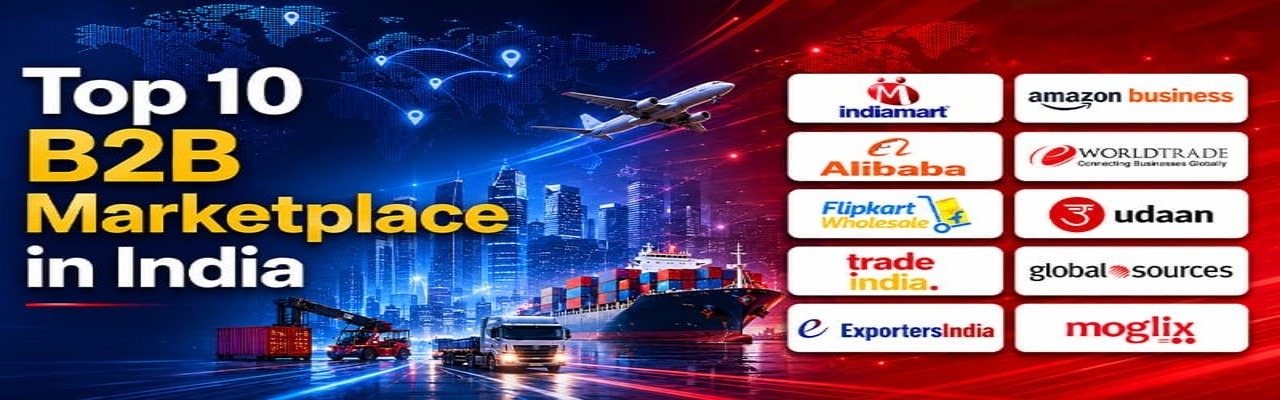
The top B2B marketplace in India can uplift your B2B business’s growth. Online B2B marketplaces have revolutionized the B2B industry. Earlier, conventional B2B buying and selling took a lot of time and effort. But online B2B marketplaces have quickly changed the industry dynamic with fast-acting methods and strong results. Online marketplaces offer countless benefits, like verified buyer inquiries. So, how do the top B2B marketplaces in India connect manufacturers, wholesalers, and MSMEs? B2B TradeMart, IndiaMart, Trade India, ExportersIndia, etc. offer many perks. This blog covers the top 10 B2B websites in India, the benefits and challenges of the top B2B marketplace in India, and the future opportunities they offer. What is a B2B Marketplace? A B2B marketplace is an online business-to-business platform where buyers and sellers connect and perform trade. In B2B marketplaces, companies buy and sell products and services exclusively in the B2B sector. In simple terms, B2B marketplaces are like Amazon or eBay, but for wholesale buying and selling. These platforms manage corporate trade, especially bulk purchasing and complex supply chain management. How B2B Marketplaces Work? Unlike regular B2C and D2C marketplaces, where individual buyers purchase a single product, a B2B marketplace is for bulk orders. Here, manufacturers, wholesalers, distributors, retailers, and suppliers connect to buy and sell in bulk. Offline or manual negotiations are ineffective in B2B marketing because these businesses require back-and-forth emails, spreadsheets, and digital tools to streamline trade. Top 10 B2B Marketplaces in India The following are the top 10 B2B marketplaces in India: IndiaMART IndiaMART is one of India's top B2B portals and the largest and most popular e-commerce marketplaces for trading goods and services online in India. The platform has dominated the market for decades, and much of that success is due to its dedicated tools designed for MSMEs. IndiaMART has connected over 60 lakh suppliers and buyers across 50+ industries. The platform is among the successful B2B sites in India due to the following reasons: Key Features: Large Network - IndiaMART has an excellent track record of drawing businesses and verified leads. Small City Growth - The platform is unlocking entrepreneurial opportunities across India, especially in small Indian cities that serve as lifelines for regional businesses. Verified Platform - The platform is building trust among users in the B2B industry. They offer verified badges and Trust Seal certificates to ensure the authenticity of buyers and suppliers after thorough background checks. Detecting Buyer Requirements - The platform uses algorithms to detect buyers’ requirements and connect them with suppliers who can deliver the best results. Target Audience: Manufacturers Suppliers Wholesalers Distributors Exporters Service providers MSMEs Retailers Bulk buyers TradeIndia TradeIndia is a well-established B2B marketplace that has a robust ecosystem of buyers and suppliers. Millions of MSMEs and large organizations have joined the platform to deal in 1 Lakh+ product categories. In addition, top B2B companies in India trust TradeIndia to manage their business networking, buyer leads, digital marketing, and website management. What’s more? Key Features: TradeIndia is a leading name in wholesale marketplaces thanks to its expansive user base. With millions of registered businesses, the platform generates numerous business opportunities. The platform offers comprehensive solutions, including customized listings, online catalogs, secure transactions, and dedicated payment & account management systems. TradeIndia hosts and organizes trade events to offer both online and offline exposure to new and existing businesses. At these events, businesses showcase their products and services in person and virtually, and highlight their brand’s uniqueness in a competitive market. The platform fosters a secure, reliable environment with verified business listings and legitimate ratings. Target Audience: Manufacturers Exporters Importers Wholesalers Distributors MSMEs Industrial buyers Service providers ExportersIndia ExportersIndia is known for its massive network of global buyers and suppliers. The platform helps MSMEs gain global exposure by increasing visibility and connecting businesses for mutually beneficial opportunities. Key Features: Millions of verified buyers and suppliers promote a vast network. By joining ExportersIndia, businesses get instant recognition in the global marketplace. Get dedicated support for the business’s growth through inquiry tools, lead generation, and international trade navigation. Highlight your business authenticity indicators like certifications, product portfolios, awards, and other comprehensive profiles for competitive advantage. An SEO-friendly business model gives your business organic exposure and better rankings in top search engines. Target Audience: Exporters Manufacturers International suppliers Importers Wholesalers Trading companies MSMEs Global buyers Amazon Business Amazon Business is a popular B2B marketplace in India that combines e-commerce convenience with technical expertise. Because the marketplace offers a familiar experience, procurement tools are easy an use for corporate buying and selling. The platform allows businesses to streamline operations. Key Features: Tax & compliance solutions that enable businesses to list GST-enabled products, easily download invoices, and claim tax credits for bulk sales. The platform controls corporate purchasing, including spending limit management, purchase customization, expense adjustments, and approval workflows. Unlock bulk discounts and get better pricing on large orders or frequent buying. Amazon is a reliable name that ensures fast logistics through its doorstep delivery service. Target Audience: Offices Startups Corporations Schools Hospitals Government organizations Retailers Small businesses Institutional procurement teams Alibaba India Alibaba India is one of the top 10 B2B portal in India that connects MSMEs with international buyers. The platform promotes cross-border trade and opens countless export opportunities. That’s why it is the best b2b portal for export business in India. Key Features: International Supplier Network: Buyers can discover suppliers from multiple countries and manufacturing hubs. Global Product Categories: The platform covers machinery, electronics, textiles, packaging, consumer goods, industrial products, raw materials, and numerous other categories. Supplier Verification: Alibaba provides supplier-related verification and assessment features to help buyers evaluate potential business partners. Trade Assurance: Eligible transactions can use Alibaba's Trade Assurance mechanism, subject to applicable terms and conditions. RFQ & Inquiry Tools: Buyers can submit requirements and receive quotations from suppliers. Customization: Many manufacturers offer OEM/ODM and private-label production options. International Sourcing: Businesses can compare international suppliers, specifications, minimum order quantities, and quotations. Target Audience: Importers Exporters Manufacturers Wholesalers Private-label businesses Distributors International sourcing companies Large-scale buyers   Flipkart Wholesale To simplify bulk procurement, Flipkart Wholesale is a popular choice. The portal offers competitive prices and a diverse product catalog across several niches, including grocery, apparel, electronics, consumer goods, and more. Key Features: Bulk Procurement: Businesses can place larger orders across multiple product categories. Competitive Pricing: Wholesale-oriented pricing can make bulk procurement more economical for eligible buyers. Wide Product Range: Categories can include grocery, general merchandise, apparel, consumer products, and other retail-oriented products. Digital Ordering: Retailers can browse products and place orders digitally. Retailer-Focused Model: The platform is designed around business buyers rather than ordinary household shoppers. Supply Chain Support: Digital procurement can reduce retailers' reliance on traditional wholesale channels. Target Audience: Kirana stores Retailers Small businesses Resellers Local merchants Wholesale buyers B2B TradeMart B2B TradeMart is a trending B2B portal in India that connects MSMEs, large enterprises, wholesalers, and verified suppliers to streamline wholesale and corporate trade. It is a centralized hub for B2B buyers and sellers to scale their business with reduced marketing expenses and safe transactions. With B2B TradeMart, businesses can get several benefits, like: Key Features: Secure Platform - B2B TradeMart prioritizes security by verifying business profiles and ensuring the authenticity of both buyers and suppliers. This keeps the platform safe by significantly reducing the risk of fraud and non-verified leads. Wider Business Reach - B2B TradeMart is a B2B portal that lets businesses display their profiles and product catalogs 24/7. This way, whether you belong to the manufacturing, wholesaling, or MSMEs business, you can expand your business’s reach to a wider audience. User-Friendly Interface - B2B TradeMart offers a user-friendly interface thanks to its AI-based recommendations and advanced filters. These filters help in creating a personalized layout for businesses. As a result, sellers can use the data-driven insights and analytics to optimize their pricing and business listings. Seamless Operation - B2B TradeMart has an integrated trade cycle that includes communication tools and an inquiry system, streamlining operations seamlessly. Target Audience: Manufacturers Wholesalers Distributors Exporters Importers MSMEs Retailers Corporate buyers Bulk purchasers Udaan Udaan is a revolutionary marketplace that empowers the MSMEs engaged in B2B buying and selling. The platform has eliminated supply chain intermediaries and offers highly competitive wholesale prices. Key Features: Digital Wholesale Procurement: Retailers can discover and purchase products digitally. Retailer-Focused Marketplace: The platform is particularly relevant to small retailers and local businesses. Competitive Wholesale Pricing: Bulk and business-oriented purchasing can provide retailers with competitive prices. Multiple Product Categories: The platform has operated across categories such as FMCG, electronics, lifestyle products, and other retail merchandise. Supply Chain Support: Technology can help coordinate procurement, logistics, and seller-buyer interactions. Business Financing: Udaan has also developed financial services and credit-related offerings for eligible business users. Local Market Reach: The platform is designed to connect brands and suppliers with retailers across India's fragmented retail ecosystem. Target Audience: Kirana stores Retailers Small businesses Brands Wholesalers Manufacturers Distributors JioMart Partner JioMart Partner offers bulk discounts to the neighborhood kiranas, hotels, and local small businesses. In addition, digital procurement, door-to-door delivery, and the elimination of wholesalers help streamline business processes on this platform. Key Fetaures: Digital Procurement: Retailers can use digital channels to source products. Wholesale-Oriented Purchasing: Businesses can purchase products in quantities suitable for their operations. Product Variety: The broader JioMart ecosystem spans grocery, FMCG, consumer goods, electronics, and other categories. Retailer Support: The model is focused on helping small and neighborhood businesses improve procurement efficiency. Delivery & Supply Chain: Digital ordering can make inventory replenishment more convenient. Reliance Ecosystem: The platform benefits from the broader infrastructure and retail presence of the Reliance ecosystem. Target Audience: Kirana stores Neighborhood retailers Small businesses Hotels Restaurants Local merchants Institutional buyers Moglix Moglix offers a reliable business experience that is similar to Amazon’s. The digital fragmentation, industrial supply chain, and MSME-centric practices make it a suitable B2B portal in India. Key Features: Industrial Product Catalog: Moglix offers products across tools, electrical equipment, safety gear, hardware, office supplies, cleaning products, and industrial consumables. Business Procurement: Organizations can use the platform to source products required for regular operations. Bulk Purchasing: Businesses can place larger orders and source multiple products through one procurement channel. Enterprise Solutions: Procurement tools can help larger organizations manage business purchasing. Product Discovery: Businesses can compare specifications, brands, and prices across product categories. Supply Chain Support: Moglix combines digital commerce with logistics and industrial supply-chain capabilities. MSME-Friendly Approach: Smaller businesses can also use the platform to source industrial and operational supplies. Target Audience: Manufacturers Factories Construction companies Contractors Industrial buyers MSMEs Procurement departments Offices Maintenance teams Large enterprises Comparison Table of Top B2B Marketplaces in India Below is the comparison table for the top B2B marketplaces in India:   Platform Best For Industry Pricing App Available Export Support B2B TradeMart Manufacturers, suppliers, wholesalers Multi-industry  Free listing + paid promotional plans  Yes  Moderate export support  IndiaMART MSMEs, manufacturers, wholesalers Multi-industry Free basic listing / Paid premium plans Yes Limited international support TradeIndia Exporters and industrial suppliers  Industrial goods, textiles, machinery  Free + subscription plans  Yes  Strong export-import support  ExportersIndia Small exporters and MSMEs  Handicrafts, agriculture, and engineering  Free + premium membership  Yes  Dedicated export support  Amazon Business Corporate and bulk purchasing  Office supplies, FMCG, electronics  Free buyer account; seller fees apply  Yes  Moderate export capabilities  Alibaba India Global exporters and manufacturers  Multi-industry  Free registration; paid supplier packages  Yes  Excellent global export support  Flipkart Wholesale Retailers and resellers  Grocery, fashion, electronics  Free registration  Yes  No major export support  Udaan Kirana stores, retailers, distributors  FMCG, lifestyle, electronics  Free registration  Yes  Minimal export focus  JioMart Partner Grocery retailers and small shops  FMCG, grocery  Free registration  Yes  No export support  Moglix Industrial and B2B procurement  Manufacturing, tools, safety equipment  Custom enterprise pricing  Yes  Limited export support  How to Choose the Right B2B Marketplace? Trust, relevance, and scalability are the 3 core values that ensure a B2B marketplace's credibility. Choosing the top 10 B2B websites in India is based on your business goals, target audience, budget, and industry type. To select the best marketplace, top B2B companies do the following things: Identify their business needs Check the industry relevance Compare prices and membership plans Analyze buyer traffic and global reach Look for international trade and export opportunities How easy and manageable is the platform Evaluate the platform’s reviews and success stories Check if the platform is reliable For Manufacturers A platform that offers bulk lead generation, business expansion opportunities, and verified suppliers is ideal for manufacturers. TradeIndia, IndiaMART, B2B TradeMart, Alibaba India, etc., efficiently connect manufacturers with wholesalers, suppliers, and bulk buyers globally. For Retailers For retailers, an ideal platform must offer competitive pricing, quick & easy purchasing, fast delivery, inventory management, bulk buying, etc. IndiaMART, Amazon Business, Flipkart Wholesale, Shopify, etc., are some recommended platforms for retailers. For Exporters Exporters should focus on marketplaces that provide global visibility and support the export market. Access to global buyers and efficient export management facilities are perfect for exporters. Alibaba India is a great platform for exporters because it promotes cross-border trade. For Small Businesses Small businesses need affordable top B2B companies in India that generate growth opportunities, along with a simple onboarding process to increase their online visibility. Platforms like Flipkart Wholesaler, Amazon Business, Trade India, etc., are ideal for small businesses. For Industrial Procurement Platforms that use the right tools, bulk procurement solutions, safety measures, and specialized technologies are ideal for industrial procurement. Top B2B lead generation companies in India support expansive product catalogs and business solutions. Moglix, Alibaba, Trade India, and others are suitable industrial procurement platforms. Benefits of Using B2B Marketplaces The following are the benefits of using B2B marketplaces: Faster Supplier Discovery The best B2B platforms make it easy for businesses to discover verified manufacturers, wholesalers, and suppliers on a single platform. Now, companies can easily compare suppliers, their product catalogs, pricing, reviews, and other information without requiring excessive manual effort, saving both time and money. Reduced Operational Costs By reducing marketing, procurement, and communication expenses, the top 10 B2B portal in India are helping businesses reduce their operational costs. Additionally, profit margins are increasing through bulk purchasing, direct communication with suppliers, competitive pricing, and manageable operational costs. Scalable Procurement B2B marketplaces support MSMEs, wholesalers, suppliers, and bulk buyers with the tools they need. These platforms give them access to a wider supplier network and bulk inventory options. This allows businesses to scale their procurement without worrying about making a heavy investment to source items and prepare infrastructure. Better Business Networking Top B2B lead generation companies in India trust B2B marketplaces for better business networking, as the platforms are ideal for connecting manufacturers, retailers, exporters, and distributors across industries and regions. As a result, businesses build long-term partnerships and find new opportunities to expand their network via trade inquiries and direct interactions. Challenges of B2B Marketplaces The top B2B marketplace in India is best known for offering convenience and opportunities for business expansion. However, even the top marketplace faces some challenges. Like any industry, even the best B2B platforms face setbacks. Since the industry is dynamic, challenges will surely occur. Every business must be aware of these limitations before starting B2B buying and selling. The challenges of B2B marketplaces are: Fake Suppliers Unverified or fake suppliers are among the most pressing challenges that B2B companies in India face when seeking business expansion opportunities on B2B marketplaces. Sometimes sellers provide false or misleading information, product details, or certifications, or, worse, disappear after receiving payment. As a result, businesses face order delays, financial losses, and broken business relationships. That is why verifying a supplier’s authenticity is essential. Always look for proof of legitimacy, such as reviews, certifications, and company information, before finalizing transactions. Price Competition Since multiple suppliers offer the same product category on the same platform, competition is higher in B2B marketplaces. This often leads to price wars between suppliers and pressures them to reduce their profit margins to attract more buyers. These strategies can be challenging for small businesses, which struggle to compete with large companies offering bulk discounts and competitive pricing while barely making anything. Quality Control Issues Dealing with unknown suppliers online can be tricky, as there is no certainty that they will maintain consistent product quality or that the product will be up to the mark. Often, product images and descriptions do not match the product delivered to customers. In fact, businesses may receive poor-quality, defective, or low-standard goods, which may disrupt operational efficiency and fail to satisfy customers. So, to eliminate quality issues, proper sample testing and the product’s quality evaluation are a must. Shipping Delays In B2B operations, delivering the products and services on time is important. However, delivery delays are quite common in the top B2B marketplace in India. Inventory storage issues, logistics challenges, customs clearance issues, and poor supply chain management are among the major reasons for shipping delays. Delivery delays disrupt the entire product schedule and increase operational costs. This negatively impacts a business’s reputation due to broken commitments. Future of B2B E-commerce in India The future of B2B ecommerce in India shows great potential and promising growth. With relentless digital transformation, internet dominance, adoption of online business models, and the ability to target the right market niches, the future looks promising for manufacturers, wholesalers, retailers, exporters, and suppliers. Conventional procurement methods are nearing their end as businesses seek faster, more efficient platforms, such as digital marketplaces. The future holds lots of benefits that could be due to the following reasons: Digital Marketplace Growth B2B marketplaces are expected to grow significantly as businesses rely more on online sourcing and bulk purchasing. Online marketplaces make procurement easier and more transparent by helping suppliers in India and abroad. Increase in MSMEs Micro, Small, and Medium Enterprises will continue to choose B2B marketplaces for e-commerce, as these platforms help expand their reach and reduce operational costs. With digital platforms, small companies can compete with big names in the industry, as the top B2B marketplace in India provides them access to a wider customer base and helps them connect with better suppliers. AI Integration and Automation AI, data analytics, and automation play an influential role in deciding the future of B2B e-commerce in India. Businesses will use powerful tools to forecast the scope of improvement for an efficient customer experience, including automated inventory management, AI-powered recommendations, chatbots, and demand forecasting. Cross-Border Trade Expansion Indian businesses are making every effort to enter the global market to increase their brand’s visibility internationally. The future of e-commerce in B2B marketplaces will increase opportunities to connect Indian businesses with international audiences. With cross-border trade opportunities, manufacturers and exporters will expand their businesses by connecting directly with international buyers. Digital Initiatives Supported by the Government The Government of India has launched many initiatives to encourage startups and MSMEs. Digital India and Startup India are among the schemes launched to encourage businesses to adopt e-commerce platforms. In addition, GST implementation is also benefiting businesses. These government initiatives improve transparency, support e-commerce growth, and simplify taxation for businesses across India. Conclusion In conclusion, B2B marketplace platforms connect and promote hassle-free trade among buyers and suppliers. These platforms are efficient for bulk trade among wholesalers, manufacturers, retailers, suppliers, and bulk buyers. Conventional methods were extremely time-consuming, but online marketplaces streamline business processes. IndiaMART, ExportersIndia, Trade India, B2B TradeMart, Amazon Business, Flipkart Wholesale, and others are among the top B2B companies shaping B2B e-commerce. Top B2B marketplaces in India offer benefits such as faster supplier discovery, lower operating costs, scalable procurement, and improved business networking. However, online marketplaces also pose challenges. Moreover, online marketplaces offer growth opportunities. Every business should focus on these platforms. The future will offer countless business opportunities that will take B2B buying and selling to the next level.

furniture manufacturers

Where to Find Furniture Manufacturers to Support your B2B Business?

In the Digital era, connecting and trading with the best and most trusted businesses has become easy. So if you are a bulk buyer looking for furniture manufacturers, you can find legit companies at your fingertips. Looking for a business and connecting for trade is not as complicated as it used to be. Today, people can use many online platforms to find businesses and connect with them. This has been nothing but an advantage in several industries, like the furniture industry. Basically, a buyer in Kanyakumari can locate and connect with a manufacturer in Kashmir within a few seconds. With the right online B2B marketplace network, buying and selling B2B products has become quick and easy. If you are new to the online B2B network or want to know how these B2B trade platforms can help your furniture business thrive, you have landed on the right page. The blog will help you understand where to find furniture manufacturers to support your B2B business. Keep reading the blog to understand the difference between conventional and digital B2B business models, and how B2B TradeMart is an ideal platform for your B2B business. Conventional vs Digital B2B Business Below is the comparison between conventional and digital B2B businesses: Conventional B2B Businesses Conventional or traditional B2B businesses relied on offline interactions, business goodwill, physical presence, and time-consuming sales processes. Earlier, people used to spend days conducting market surveys just to find the right furniture manufacturers that offered both quality and affordable prices. This was not at all easy, as communication was possible through in-person meetings, phone calls, trade fairs, via distributors, or paperwork. Due to limited digital technology, business operations and customer engagement were challenging. In fact, businesses often end up with manufacturers that can either deliver high-quality furniture or affordable products. As a result, bulk buyers had no choice but to accept the situation and purchase furniture for resale. But this is no longer the case. Features of the Conventional Business Model Phone calls, physical meetings, and printed catalogs were the only sources of communication. Buying and selling products was a lengthy process and relied solely on trust. References, print media advertisements, and trade fairs were the only marketing sources. Business integration through digitalization was quite limited. Conventional businesses did not have a wide customer base, as most customers were locals or from the same region. Businesses manually tracked data using paperwork and record-keeping. Companies preferred prior experience and intuition when making decisions. No strategies were used to improve customer experience. Digital B2B Businesses Digital B2B businesses use online platforms, data analytics, business automation tools, and other digital strategies to streamline their operations. Ever since online B2B platforms entered the picture, business tactics have changed immensely. Today, bulk buyers are not required to spend days on market research or compromise on quality or prices. Online tactics help businesses to communicate with potential buyers and enhance customer relationships. A digital business model promotes personalized marketing strategies and technology-driven solutions to ensure global connectivity. There are many online business marketplaces for B2B businesses to ensure smooth operation and prompt trading. B2B Portals allow small businesses to compare different furniture manufacturers in Delhi, Chennai, Maharashtra, Rajasthan, or across India. Features of the Digital Business Model Email, chatbots, video conferencing, and CRM tools are used for communication. Buying and selling products is fast, data-driven, and automated. Digital marketing strategies, paid campaigns, SEO, social media, email marketing, and other automated techniques are used for marketing. Technologies like Artificial Intelligence, cloud software, automation, and analytics tools are necessary. Online platforms enable digital businesses to reach global markets. CRM software systems and real-time database management make data tracking and management easy. Decisions are made based on data captured or driven by analytic tools. Digital businesses hire customer service representatives and use responsive interaction bots to deliver a personalized customer experience. How to Find Furniture Manufacturers in India with Modern B2B Techniques? There are many B2B marketplaces that connect buyers with a trusted luxury furniture manufacturer in Delhi and across India. Connecting with furniture manufacturers is not particularly challenging, especially if you use online platforms. B2B marketplaces like IndiaMART, TradeIndia, Exporter’s India, Amazon Business, and the rest make online buying and selling among B2B companies easy. B2B TradeMart is also an efficient marketplace where buyers can find furniture manufacturers, wholesalers, and suppliers. Using these platforms, buyers can check a business’s authenticity, product catalogs, reviews, and compare prices. Modern B2B solutions promote transparency and quick actions. The following are some effective ways to find furniture manufacturers in India: Use appropriate B2B marketplace platforms to connect directly with suppliers. Search for furniture manufacturers on Google & other search engines, and optimized business directories. B2B networking is another impactful way to find a luxury furniture manufacturer in Delhi. Check a company’s reviews on Google and its digital reputation on social media. Always attend trade fairs to connect with businesses organically. Request product catalogs and samples if possible to check the product’s quality. Check for any certifications to verify a business’s authenticity. Connect with Furniture Manufacturers on B2B TradeMart If you are looking for furniture manufacturers for bulk purchases, B2B TradeMart is your go-to. We are an online B2B marketplace that connects buyers and suppliers. Here, buyers can look for furniture manufacturers, wholesalers, and suppliers. Similarly, we allow suppliers to get verified buyer leads to grow their furniture business. Whether you own a small furniture shop or want to bulk buy furniture to decorate your commercial space, you will find trusted businesses on B2B TradeMart. Our platform is 24/7 available. So if someone is looking to buy furniture for a restaurant, hotel, school, hospital, or shop, they can simply look for one on our portal. Moreover, we make B2B buying and selling quick and hassle-free. So, connect with furniture manufacturers on B2B TradeMart today and grow your B2B business effortlessly.

How to Start a Manufacturing Business in India

How to Start a Manufacturing Business in India 2026?

Are you planning to start your own manufacturing business? Don’t know how to start a manufacturing business in India? Relax! Starting a business in the manufacturing sector is not challenging at all. Anyone can do it. Nowadays, India meets new budding entrepreneurs from almost every sector. Manufacturing is one of the most in-demand business models because it addresses pain points in the Indian market. Other than that, running manufacturing units creates massive job opportunities and reduces unemployment in the remote parts of India. Additionally, manufacturing businesses reduce reliance on foreign imports and boost exports. All the benefits eventually contribute to India’s economic development. However, the competition in the manufacturing sector is relatively high. There is fierce competition among top manufacturing business ideas as everyone is drawn towards them. To be honest, choosing ideas in a fiercely competitive space is not a wise decision, especially if your budget is low. You can look for manufacturing business ideas that require low investment. But that totally depends on your budget and business objective. Moving on to our topic, “How to Start a Manufacturing Business in India”, we present this blog. Here, you will learn the steps to start a manufacturing business and some great manufacturing business ideas. Let’s find out how to start a manufacturing business. How to Start a Manufacturing Business in India in a Few Easy Steps? Manufacturing businesses have their fair share of India’s GDP. The manufacturing sector is always in demand. Wholesalers and suppliers, and consumers- everyone relies on manufacturing businesses for further selling and consuming. Other than that, manufacturing businesses create tons of employment opportunities, reduce India’s dependency on imports, and generate revenue from exports. Overall, opening manufacturing companies is a win-win for India’s economy and its own growth. But how to start a manufacturing business in India? One can start their own manufacturing business in India by following some crucial steps. These steps are important for all kinds of manufacturing businesses, regardless of their size. The following are the steps involved in starting a manufacturing business in India: Step 1: Find a Business Niche You Wish to Pursue The most important step in starting a manufacturing business in India is finding a niche you want to pursue. You must choose a niche that aligns perfectly with your interests. Additionally, you should have the right skills to pursue that business idea. Figuring out the right manufacturing business ideas in India depends on the market’s demand, your budget, and the audience you wish to target. Food processing, electronics, pharmaceuticals, textiles, packaging, and consumer goods are among the industries that require in-depth research. If you wish to target any of these niches, you must analyze the market and identify measures you can take to satisfy customer needs and make your business stand out from the competition. Other than that, when finding a business niche, you must evaluate future opportunities before pursuing that niche. These key considerations are the foundation of ensuring long-term success in your manufacturing business. So before figuring out how to start a manufacturing business, you must decide the niche you wish to pursue. Step 2: Write a Business Plan That Actually Works Once you have decided on your business niche among manufacturing business ideas in India, you can move on to the next step, which is developing a business plan. You must prepare a well-structured business plan, as it will be useful in the long run. A business plan usually works as a roadmap that guides you through every key step. For any manufacturing company, creating a business roadmap is important. The business plan should include your business objectives, long-term goals, strategies, target audience, production details, process, operational cost, and revenue forecast. With a detailed business plan, one can organize their manufacturing business processes. The plan will simultaneously increase your chances of securing funding from businesses, potential investors, and financial institutions. Step 3: Choose Your Business Structure Then, the next step on “how to start a manufacturing business in India” is choosing your business structure. Choose the legal business structure that best suits your business objectives. Sole Proprietorship, Partnership Firm, LLP (Limited Liability Partnership). PVT LTD (Private Limited Company) and OPC (One Person Company) are some common legal structures of Indian businesses. Depending on your business story behind the idea, budget, and objectives, you can select any structure. Different structures have different policies. Legal and taxation policies will be imposed differently for each structure. Similarly, the ownership rights compliance requirements will vary. Additionally, the opportunities to raise funds and expand the business will differ across these structures. So, it is better to consult a legal advisor whose expert guidance can help you determine which business structure suits your needs and make an informed decision. Step 4: Get Your MSME Registration India Done First If your budget is low and you have decided to carry on with one of the small scale manufacturing business ideas, then you must register your MSME. Every micro, small, and medium enterprise must get registered through the Udyam Registration portal. Doing so will offer countless benefits and potential opportunities to your MSME. Moreover, registering an MSME with the government is simple. Anyone can register their small businesses online. When you get your MSME registration India done, you will be able to access government schemes. The government offers subsidies to MSMEs and lowers the interest rates on loans for small businesses. Furthermore, registering your business on the MEME portal will protect it against delayed payments. Therefore, it is highly recommended that MSMEs register their manufacturing businesses to enhance efficiency. Step 5: Obtain the Licenses Your Business Needs If you are planning to start your own manufacturing business, you must know that every manufacturing business requires specific licenses and permits for smooth operations. Depending on the industry you have chosen and the location of the manufacturing unit, you will need to obtain licenses and permits from the relevant authorities. GST registration, manufacturing permit, factory license, Trade License, approvals from the Pollution Control Board, Fire Safety Certificate, and other legal paperwork, in line with industry dynamics, are essential licenses and permits that a manufacturing business may require. If you ensure you obtain the required licenses from the outset, you can prevent operational disruptions and avoid future penalties. Step 6: Secure Funding For Your Manufacturing Business Like any other business, a manufacturing business also requires capital investment to commence operations. To purchase machinery and raw materials, entrepreneurs must invest significant capital. The initial investment will help establish the business infrastructure and cover workforce expenses. If you have sufficient personal savings, you can use that as a capital investment. But if you lack capital, you can always seek investors willing to finance your manufacturing business. There are many ways to secure funding for your business. Bank loans, MSME loans, angel investors, partnership businesses, government schemes, and venture capital are popular options for securing funding. You can also ask family, relatives, and friends to loan you some money for your business. Make sure to carefully calculate the operating expenses before seeking funding for your manufacturing startup. Step 7: Choose Your Factory Location Wisely Your manufacturing business’s location plays a crucial role in determining whether it will survive and grow. You must choose your factory’s location wisely. If your manufacturing unit is located in an appropriate location, production efficiency and the likelihood of profitable outcomes will be significantly higher. You should neither choose a far-too-remote location nor a posh area. Many factors may be affected by the factory's location. Availability of raw materials, transportation services, labor, utility costs, and the ability to reach the target audience are some of the factors that depend on the factory’s location. By choosing better locations for manufacturing units, businesses can set up better infrastructure. Industrial zones and manufacturing hubs even offer government incentives to help manufacturing businesses secure better locations for their factories. Step 8: Set Up Machinery and Build Your Supply Chain Once you have established your factory, it is time to set up machinery and focus on supply chain management. Buy appropriate machinery and equipment that meet your manufacturing requirements and will maintain the quality standards of your output. The ideal machinery must be cost-effective. So you should look for quality equipment that doesn't force you to compromise on your manufacturing just because the machine is cheaper. If needed, set up slightly more expensive machinery, as it is perfect from a longevity standpoint. Moreover, you should focus on building healthy relationships with your suppliers, who will provide you with raw materials, packaging materials, and logistics support. Doing so will eventually build a strong and reliable supply chain management system for your manufacturing business. As a result, your supply chain will grow stronger, and production will run more smoothly. Eventually, production quality will be consistently maintained, and the risk of delays will be minimized. Step 9: Build and Train Your Team Manufacturing businesses need professionals to organize and perform tasks. Laborers, subordinate workers, supervisors, technicians, quality control specialists, and administrative staff are required in almost every manufacturing business. Your team will collaborate at every level to achieve operational objectives. Make sure to hire professional, skilled workers. Your team should be aligned with your business objectives. To ensure your staff is aligned with your operational objectives, you must conduct proper training sessions. Training the team is essential, as a well-trained workforce tends to perform more efficiently than an unskilled team. As a result, productivity improves and so does the quality of the output. Most importantly, a trained staff will follow the safety protocols during the manufacturing process. By maintaining safety standards, the risks of workplace incidents are reduced. Therefore, every manufacturing business must follow this step when establishing its operations. Step 10: Produce, Verify Quality, and Go to Market Once everything is done as required, proceed to the final step. Starting production is the last step, which no entrepreneur should neglect. You must take strict quality control measures during production. Verifying the quality of output is a must. If you find something wrong or not up to the mark, you must fix it immediately. Conduct regular testing of your product’s quality and determine if your product meets industry standards. If the product does not pass the quality tests, avoid sending it to suppliers, and if the customer does not give positive feedback, it will eventually build a poor reputation for your brand. Make sure your manufactured products meet customer expectations. Furthermore, you must develop relevant marketing strategies to boost your sales. Whether you want to sell your products to wholesalers, distributors, retailers, or e-commerce platforms, or sell directly through your own sales channels, you need to prepare different marketing strategies. With consistent product quality and effective marketing tactics, you will definitely build a successful brand and achieve your organizational goals. Best B2B Portals in India for Manufacturers B2B platforms are a lifesaver for manufacturing businesses, as the best B2B portals in India give manufacturers exposure to the online business world. Online B2B marketplaces offer great online visibility to your business, and you can access a large network of buyers. Additionally, B2B marketplaces uncover countless marketing opportunities, and that too in a cost-effective way. These platforms are best known for buyer-supplier interactions, generating quality leads, and supporting domestic & international trade. Additionally, the best B2B portals in India help businesses reach global markets. For expansion, these platforms don’t require the huge investments that traditional marketing does. Moreover, many digital tools make business promotion and operations easier and faster. As a result, manufacturers attract relevant buyers and significantly expand their businesses. The following are some of the top B2B marketplaces in India : B2B TradeMart B2B TradeMart is a trending B2B portal in India. The portal is perfect for manufacturers looking for B2B buyers. The platforms connect manufacturers with potential buyers across various industries. B2B TradeMart also helps manufacturing businesses create an online presence for their brand. It is a 24/7 online portal where manufacturers showcase their products, receive high-quality leads, attract more business inquiries, and expand their business domestically and internationally. IndiaMART IndiaMART is one of India’s largest and longest-running B2B marketplaces. The platform has been connecting manufacturers from different niches for years. Manufacturers can display their business and products on the IndiaMART portal. Thanks to their vast digital network, businesses receive business inquiries and expand their global customer base. Trade India TradeIndia is a leading B2B portal that allows manufacturers and customers to connect and conduct trade in both domestic and international markets. The platform offers countless benefits, such as promotional tools, product listings, and trade opportunities, for manufacturing businesses regardless of their size. As a result, manufacturers are expanding their businesses and effectively reaching their full potential. ExporterIndia ExportersIndia is a comprehensive B2B marketplace in India designed for manufacturers, exporters, and suppliers engaged in global trade. Manufacturers can promote their products in this portal. The platform also enables manufacturing businesses to connect with verified buyers. ExportersIndis provides manufacturers with quality leads and helps them explore trade opportunities in the global markets. Top Manufacturing Business Ideas for Beginners Now that you know how to start a manufacturing business in India and where to sell your products, it is time to discuss the opportunities. There are countless manufacturing business ideas that are always in demand. The following are some top manufacturing business ideas you can consider: Home Decor & Furniture Home decor and furniture products are among the most demanded products. People all over the world buy home decor and furniture for utilitarian reasons and, of course, to give their home character, regardless of the home's size or their budget. Manufacturing wooden, metal, and modular furniture, as well as creative home decor items for homes and offices, will be a successful business, with a very impressive profit margin. Textile & Garment The textile and garment production industry is highly in demand. There are a few barriers to manufacturers entering the textile and garment business. Textile production can be reliable as there are countless opportunities in the targeted niche markets and export sector. Additionally, the scalability of textile & garment production is totally up to the manufacturer’s budget. Packaging Material Producing packaging material is one of the best manufacturing business ideas. There are many types of paper packaging and other material options available that you can consider. Packaging manufacturers deal with every industry model, be it B2B, B2C, D2C, or C2C. In fact, it is one of the best B2B manufacturing business ideas, as B2B businesses require sturdy packaging materials to prevent damage, and you can meet this demand by providing high-quality packaging materials. Organic Skincare Products Organic skincare products are one of the most trending manufacturing business ideas in India. Nowadays, consumers have shifted their interest toward organic products because they are natural and have no side effects. You can definitely find opportunities to grow your manufacturing business by producing organic skincare products. Since the products are organically manufactured, you have a valid reason to keep the prices so high. Custom Printed Products People are often attracted to personalized products crafted to their requirements. This is why producing custom-printed products is one of the most distinctive manufacturing business ideas in India. Your manufacturing company can improve operational efficiency and stand out from the crowd by selling customized products such as apparel, gift items, water bottles, coffee mugs, keychains, nameplates, and other merchandise. Pet Supplies Manufacturing pet supplies is yet another one of the most trending manufacturing business ideas. Lots of pet-lovers look for reliable manufacturers who sell quality products for the well-being of their furry friends. You can meet this market demand by selling pet supplies such as food, treats, medicines, clothing, leashes, toys, and more. Plus, you will be connecting with pet lovers from a human perspective. Automobile Equipment Manufacturing automobile equipment is a highly profitable business. It is in high demand in domestic and international markets. In fact, automobile equipment and engineering goods are among the top 10 export products from India . You can opt for this manufacturing business idea and target global markets. Make sure to maintain strict control over quality and scale your growth to identify potential opportunities. Pharmaceuticals & Drugs The pharmaceutical and drug sector is the longest-running manufacturing business. It shall continue to grow, considering the heavy demand and people’s reliance on medicine and medical equipment. Many advanced technologies have been introduced to automate the production process. So, you can consider this business idea and earn great profit margins. Small Scale Manufacturing Business Ideas If you are a budding entrepreneur trying your luck in the manufacturing world but not looking for a super expensive business model, don’t worry! If you know how to start a manufacturing business in India, just focus on that. Don’t think of an extravagant business idea. There are lots of small-scale business ideas that you can consider for your manufacturing business. These ideas are simply perfect for MSMEs, as anyone can operate them from their home. Small scale manufacturing business ideas that will definitely suit you if you have limited funds to invest. The following are some manufacturing business ideas for people with a small budget: Bakery Products The demand for packaged food products is increasing day by day. Manufacturing bakery products at home is surely one of the low investment manufacturing business ideas. Anyone can run a profitable business venture by selling homemade cookies, biscuits, breads, cakes, and snacks. Powdered Spices Selling homemade powdered spices is one of the most popular remote business ideas among Indian women from rural backgrounds. Producing and packaging powdered spices such as red chili, turmeric, coriander, dried mango, cumin, etc., has excellent growth potential in Indian markets. Plus, you can start it from your home. Jams, Pickles & Condiments Like powdered spices, selling table condiments like jams, pickles, ketchups, sauces, and chutneys is one of the best manufacturing business ideas. Indian households have been producing these products for years. Many women in India have opted for MSMEs, producing and selling handmade jams, pickles, and condiments on a small scale. So if you have limited funds, you can opt for this manufacturing business and deliver authentic Indian condiment flavors to every Indian household. Handmade Candle  If you are looking for unique manufacturing business ideas, consider making handmade candles. Nowadays, many businesses sell candle designs that replicate sweets, flowers, famous sculptures, and other iconic subjects. Additionally, scented candles are highly popular in the home decor industry. Most importantly, people use candles for religious purposes, like in churches or during Diwali. So you will already be targeting a market with year-round high demand. Low Investment Manufacturing Business Ideas Now that you know how to start a manufacturing business in India, you should move on to the next question: “How to start one with a limited investment?” But first, know your options for low-investment businesses. If you want to start a manufacturing business that does not cost a lot, then you should look for low investment manufacturing business ideas. The following are some manufacturing business ideas in India that one can start with low investment: Powdered Spices As described above, manufacturing powdered spices can commence from home, it is indeed great for people with low investments. It is perfect for people in remote settings, and you do not require a large setup. In fact, small-scale manufacturers can use manual and machine input to produce powdered spices. Paper Bag Paper bags are a perfect packaging option that many stores use. Manufacturers can produce hand-crafted paper bags and sell them to retailers and gift shops. Paper bag manufacturing is a scalable business model and in demand across B2B sectors. Additionally, paper shopping bags can be sold to clothing brands, footwear stores, and other outlets. Incense Sticks Manufacturing incense sticks is also a low-investment business idea. The raw materials are readily available at low cost, and the manufacturing process is not complicated. Plus, it is consistently demanded throughout the year. Cleaning Products & Supplies Detergent soap, detergent powder, and dish liquids are essential household cleaning products. Simultaneously, cleaning supplies like scrub pads, mops, wipers, brooms, and brushes are essential tools for cleaning. If you manufacture these products, you will definitely succeed, as the target audience base is quite wide. Manufacturing cleaning products and supplies requires low production costs. Most importantly, it will be an opportunity for you to build a local brand recognized by every Indian household. Unique Manufacturing Business Ideas with High Profit Everyone looks for business ideas that are out of the league, as the chances of gaining recognition in a new or less-known industry are higher. To understand how to start a manufacturing business in India, you should focus on teh uniqueness of your business idea. The more unique your business is, the higher your profit margins can be. The following are some unique manufacturing business ideas with a high profit margin: Eco-Friendly Packaging Manufacturing eco-friendly packaging, cutlery, paper straws, and biodegradable food products is sustainable. Many restaurants have opted for eco-friendly packaging solutions. So it is a unique business idea for manufacturers, and it offers high profit margins. Customized Corporate Gifting Corporate gifting is a new trend aimed at pleasing clients in the corporate world. Businesses look for personalized gift boxes, office kits, branded merchandise, and promotional items to give away during business events. You can consider opting for this unique idea and manufacturing corporate gifts. Ready-to-Cook Products Ready-to-cook foods, premixes, frozen foods, spice mixes, and healthy ready-to-eat munchies are gaining popularity because they satisfy cravings and are easy to cook. The uniqueness of these products is that they are great for people living away from home, like hostel kids, paying guests, or families on outings. You can produce ready-to-cook products and help people calm their hunger. Pet Products Manufacturing pet products requires limited investment. However, the profit margins are significantly higher. Pet treats, shampoos, leashes, collars, toys, clothes, and accessories are in high demand among pet owners, animal lovers, animal welfare organizations, and local activists. If you manufacture pet products, your business will rapidly gain popularity as the competition is limited so far. Best B2B Manufacturing Business Ideas The following are some of the best B2B manufacturing business ideas: Packaging Materials Every B2B business seeks reliable packaging materials that withstand transportation. You can manufacture sturdy packaging materials such as corrugated boxes, cartons, plastic, wood, and bamboo, and supply them to wholesalers, retailers, and e-commerce companies that seek durable packaging to prevent damage during transportation. Textile & Uniform  Manufacturers can trade with B2B buyers by selling textiles and uniforms. Many wholesalers and retailers look for reliable manufacturers who produce quality uniforms for schools, hospitals, and other official settings. LED Lights  Manufacturing LED lighting solutions is a win-win for residential and commercial settings. It is demanded in the B2B sector. Contractors, wholesalers, builders, retailers, and commercial buyers consistently seek reliable, cost-effective LED lighting manufacturers. Construction Materials Construction is an ongoing business. But to keep that running, builders and contractors look for manufacturers selling construction materials. You can target the B2B market by producing tiles, roofing sheets, concrete blocks, pavers, and other building materials. Profitable Small Manufacturing Business Ideas in India The following are some profitable small manufacturing business ideas in India: Corporate Gifts Corporate gifts are always in demand by businesses for corporate events, office parties, festivals, and other occasions. Manufacturing corporate gifts is a profitable business, and you can expect 40%-80% profit margins. You can do that from home and offer customized options to increase profits. Pickles & Chutneys Pickles & chutneys can be produced at home, and the production cost is manageable. This business has a high demand in the Indian markets. Thus, manufacturing pickles and chutney is a profitable business, and you can expect 55%-60% profit margins. Powdered Spices Manufacturing powdered spices from a small setup is possible. The demand for turmeric, coriander, red chili, and other powdered spices is consistent in both B2B and retail sectors. With a profit margin of 30% to 50%, it is the best business opportunity for people with limited investments. Herbal Beauty Products Herbal beauty products may target a specific niche, but the opportunity to earn significant profits is indeed the case here. Hearbalk beauty products like beauty soaps, face packs, de-tan creams, and other naturally produced products can help you earn up to 70% profits. Tips to Grow a Manufacturing Business Successfully Once you have figured out how to start a manufacturing business in India and potential opportunities in different categories, it is time to discuss the tips that can help your business thrive. Not just that, if you use the right tips, you will surely form a successful business. The following are some tips to grow your manufacturing business successfully: Focus on your product’s quality. Keep checking production periodically to deliver consistent products. Make sure your company manufactures high-quality products, as this will keep customers satisfied and maintain their trust and loyalty in your brand. Optimize the production process and reduce production costs without compromising quality. Minimizing waste is an effective way to reduce production costs and improve profit margins. Build a strong relationship with your supplier and ensure they provide high-quality raw materials you can use in further production. Use high-quality technical equipment for production when possible. It will boost production productivity, and advanced automation will improve efficiency. Do not stick to a particular seller or market. Expand your sales channels by selling through multiple channels, distributors, e-commerce platforms, retailers, and B2B marketplaces. Get regular feedback from your customers to determine if your product’s quality is up to the mark and if your products are satisfying the market’s demand. Boost your brand using professional packaging. The better the packaging, the more chances of creating an impactful online presence. Conduct regular training sessions for your employees regarding manufacturing and product knowledge. A skilled employee understands the product better and helps in improving your production quality. As a result, your manufacturing business will grow significantly. Regularly monitor your business’s performance. Track sales, production costs, and evaluate profits using records. Doing so will help you make any necessary adjustments. Use your business profits for productive investments such as adding new products, purchasing production equipment, expanding market reach, marketing, and more. Common Mistakes First-Time Manufacturers Make The following are some common mistakes that first-time manufacturers make: First-time manufacturers skip market research, believing it is unnecessary. This costs them in the long run as they find it hard to understand the customer’s demand. As a result, a lack of product knowledge leads to poor sales and purchasing excessive inventory than is required. Beginners may overlook production expenses, underestimating the funds needed for raw materials, labor, machinery maintenance, and logistics. New manufacturers neglect the product’s quality in order to lower manufacturing expenses. This results in poor production, which damages the brand’s goodwill in the market. Thus, the customer loses trust in the brand and switches to other brands. First-time manufacturers may set up the factory without proper consideration. Poor infrastructure or an unsuitable location can limit production companies in many ways, such as limited access to suppliers, high operational costs, and limited availability of skilled workers. Manufacturers do not estimate stock requirements and end up overstocking or understocking. Neither of these cases is appropriate because cash flow and production are disturbed by poor inventory management. Most manufacturers fail to obtain legal licenses and registration permits. They begin production without the necessary legal requirements, leading to penalties or, in extreme cases, business closure. The biggest mistake manufacturers make is relying on a single buying market. They don’t keep their options open, and when customers stop buying from them, it impacts their business badly. Lack of financial planning leads to unexpected expenses and losses. As a result, the cash flow management and budgeting face funding issues. Manufacturers don’t spend enough on marketing and sales promotion, which is one of the biggest reasons their businesses don’t reach potential customers. First-time manufacturers may expand production in a rush, thinking they will need it soon. Scaling too quickly without judging the consumer behavior is an error in judgement because it can lead to financial losses.